[ Bengia Ajum ]
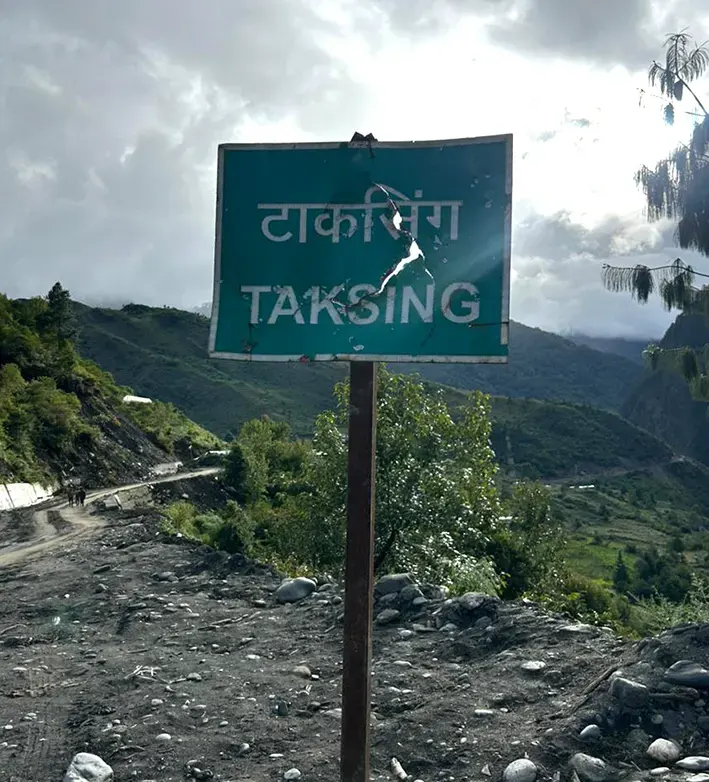
TAKSING, 1 Sep: The people of Taksing and Limeking circles in Upper Subansiri district have shared a close relationship with Tibet for centuries.
The Nah and Mra clans, residing in these two areas, used to even collect taxes from Tibetans who visited the region for religious purposes. But everything began to change when China captured Tibet, starting in 1950.
After the 1962 India-China war, the border closed, and the people-to-people movement ended.
"Before Independence, the Nah people and the Tibetan government shared a close relationship, and there was movement of people from both sides. The barter system used to be practised," said Tacham Chader, a resident of Taksing. "We used to bring items from Tibet and trade them with people from other areas like Nacho and Taliha," he added.
The Nah and Mra clans also used to collect taxes from Tibetans who visited the region for religious purposes.
"Rongkor, which is a gruelling 12-yearly pilgrimage undertaken by Tibetan devotees, passed through the areas inhabited by the Nah and Mra clans. It was a pilgrimage undertaken once every 12 years. Tibetans used to pay silver coins and eatables as tax to the two clans in return for protection and assistance during the pilgrimage. Last Rongkor pilgrimage took place in 1956," said Chader.
It was also during this period that members of the Nah clan came under the influence of Buddhism.
"During our contact with Tibetans, members of the Nah clan adopted Buddhism, and to this day, a section of the population follows Tibetan Buddhism," he added.
When China captured Tibet and the Tibetan government fell, things started to change, and the movement of people across the border came to an end.
The Mra clan people consider Longju, which has been under Chinese occupation since 1962, as their ancestral land.
"Mra clan originated from Longju, and that's why it is a special place for us even today. Longju is our land, though it has been illegally occupied by China. In fact, from Longju to Limeking, stretching over 74 km, everything belongs to the Mra clan," said Tai Mra, gaon bura of Galemo village, which is located a few kilometres from the LAC.
Lowa Xincun (Lowa New Village), built by China at the site is believed to be the old Longju village. It made headlines after pictures of the village went viral a few years ago.
GB Tai Mra also said that members of his clan used to collect taxes from Tibetans who visited the Mra area.
"We collected taxes from Tibetans. After 1962, China took Longju, and we cannot go there. It is sad that we cannot go to a place which our ancestors called home," added GB Mra.
Another member of the Nah clan, Tania Chader, shared that both the Tibetans and the Nah clan revered Portrang Lake.
"Our people used to visit Portrang Lake to cleanse themselves of their sins as per our religious beliefs. Tibetans also revered Portrang Lake and performed religious rituals there. But now even this lake is under illegal Chinese occupation," said Tania Chader.
There is an old monastery in Taksing which is believed to have been constructed centuries ago, while a new monastery has also been constructed recently.
Interestingly, in Taksing, some people using Apple products, including iPhones and Apple watches, have reported that the devices automatically switch to Chinese Standard Time (CST). Chinese Standard Time is 2 hours and 30 minutes ahead of the Indian Standard Time.