YUPIA, 4 Jun: Papum Pare DC Lobsang Tseringstressed the importance of strict compliance with the SWM Rules, 2026, in view of the directions issued by the Supreme Court.
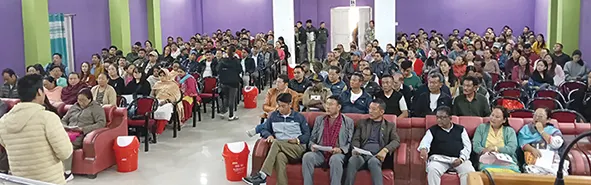
He said this while chairing the first meeting of the District Level Implementation Committee (DLIC) constituted for implementation of the Solid Waste Management (SWM) Rules, 2026, held here on Thursday.
The meeting was attended by representatives from various educational institutions, NEEPCO and Railway authorities, along with officials from the departments concerned.
Addressing the participants, Urban Development Yupia Division Executive Engineer Teri Taniya said that the DLIC meeting was convened in pursuance of the newly notified rules, which came into effect from 1 April.
The committee extensively deliberated key provisions of the rules, including four-way segregation of waste into wet, dry, sanitary and special care waste, identification and registration of bulk waste generators (BWGs), online registration through the Central Pollution Control Board (CPCB) portal, certification of compliant BWGs, powers vested with district magistrates under the Environment (Protection) Act, 1986, and responsibilities of various stakeholders.
The DC informed the members that the Government of Arunachal Pradesh is required to submit a compliance report before the Supreme Court by 6 August.
He explained that institutions consuming more than 40,000 litres of water per day, generating over 100 kilograms of waste daily, or occupying premises measuring 20,000 square metres or more qualify as BWGs under the rules. He urged all eligible institutions to complete their registration on the CPCB portal by 14 June.
A live demonstration of the registration process was also conducted during the meeting for the benefit of participating institutions.
The committee was informed that compliant BWGs would be issued certificates of compliance, valid for three years. It was further noted that the rules empower district magistrates to recommend disconnection of water and electricity services to non-compliant entities, following due procedures.
Emphasising on sustainable waste management practices, the deputy commissioner advised institutions to adopt in situ management of biodegradable waste through composting and development of kitchen gardens within their campuses. For dry waste management, institutions were encouraged to establish material recovery facilities (MRFs) wherever feasible or transport segregated waste to the existing MRF in Doimukh managed by the DUDA.
During the deliberations, the committee decided that the frequency of waste collection from institutions would be determined based on actual requirements, while user charges would be assessed by the Urban Development Department, considering operational expenses.
The meeting also discussed the establishment of a common material recovery facility for institutions such as NIT Arunachal Pradesh, FTII, Government Law College and Bini Yanga Women’s College. The Urban Development Department was tasked with preparing a detailed estimate for submission to the deputy commissioner.
As an interim arrangement, the Urban Development Department may undertake collection and transportation of segregated dry waste from these institutions until the proposed common facility becomes operational.
On the issue of e-waste management, the DC informed that forward linkages for scientific disposal and recycling would be explored in consultation with the State Pollution Control Board. Pending finalisation of such arrangements, institutions were advised to utilise authorised vendors empanelled on the Government e-Marketplace (GeM) for disposal of e-waste. (DIPRO)