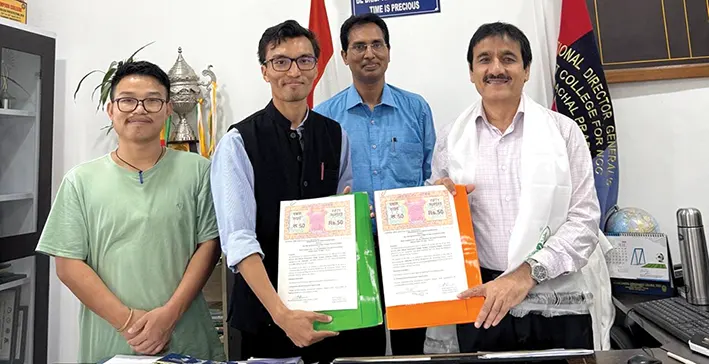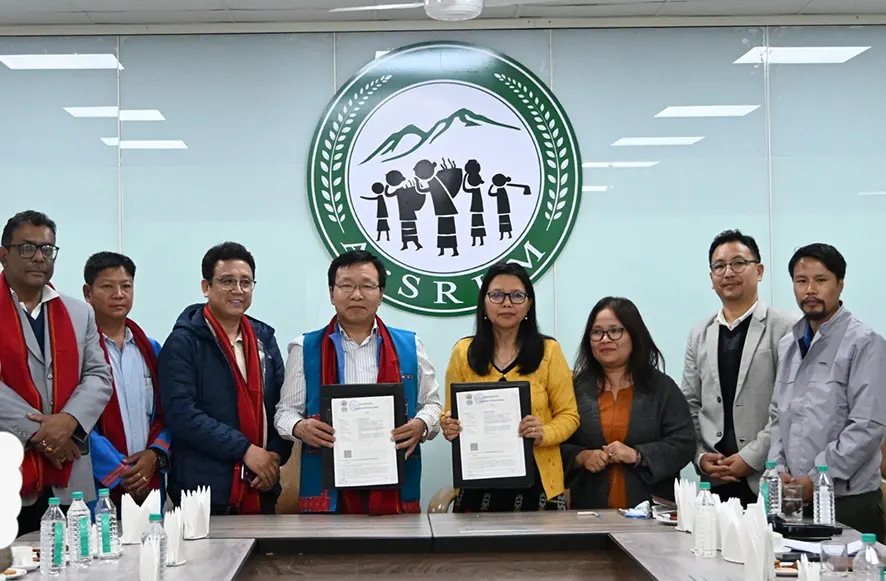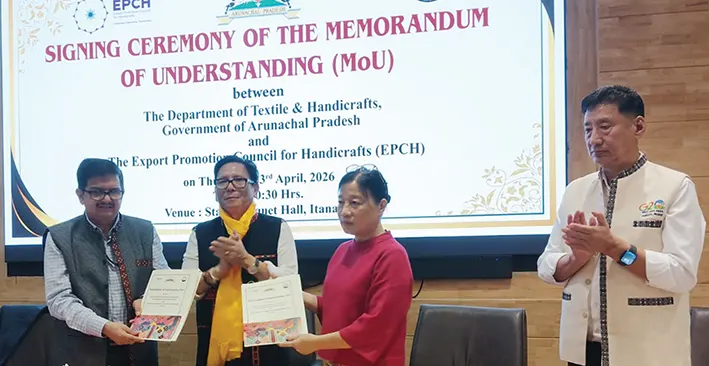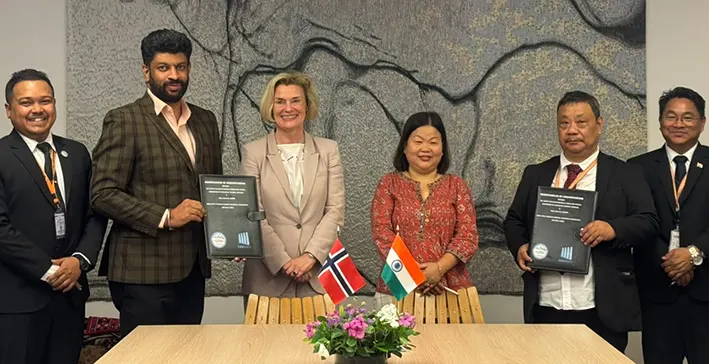

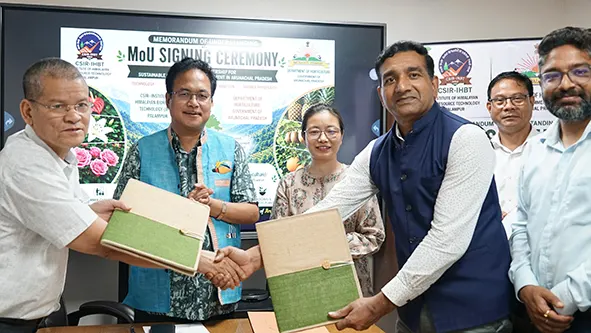
ITANAGAR, 5 Jun: In a major boost to Arunachal Pradesh’ horticulture sector, the Department of Horticulture on Thursday signed a memorandum of understanding (MoU) with the Institute of Himalayan Bioresource Technology (IHBT), Palampur, Himachal Pradesh, aimed at fostering scientific collaboration, technology transfer and sustainable horticultural development.
The MoU was signed and exchanged between Horticulture Director Tobom Bam and IHBT Director Dr Sudesh Kumar Yadav, in the presence of Horticulture Minister Gabriel D Wangsu, Horticulture Secretary Koj Rinya, senior officials of the department, and members of the IHBT delegation.
The programme commenced with a detailed presentation by IHBT principal scientist Dr Bhavya Bhargava, who highlighted the institute’s achievements, ongoing research activities and technological interventions in Himalayan horticulture, medicinal and aromatic plants, floriculture, bio-resources management and climate-resilient agricultural practices.
Addressing the gathering, Dr Yadav underscored the vast potential for collaboration between the IHBT and Arunachal, emphasising the institute’s commitment to extending scientific and technical support for sustainable horticultural development in the state.
Wangsu on his part emphasised that the agreement should not remain a mere formality but must translate into measurable outcomes for the state. “This is not just an MoU. Hopefully, it will do wonders in the future. Along with an action plan, clear timelines must also be fixed,” he said.
The minister observed that many initiatives fail at the stage of implementation and culmination, stressing that the present collaboration should be different. “Every step and every action taken under this partnership should be beneficial to our state. The entire process must be carried out professionally,” he stated.
Highlighting the similarities between the agro-climatic conditions of Himachal Pradesh and Arunachal, Wangsu noted that the expertise of the IHBT would be highly relevant to the state’s developmental aspirations. He further urged both sides to explore collaborations beyond floriculture, including high-value fruits and vegetables, medicinal and aromatic plants, and other bio-resource sectors.
“The bio-resource sector holds immense potential, and together we can contribute significantly not only to the development of Arunachal Pradesh but also to the nation. We have a long way to go with this collaboration,” the minister remarked.
Reiterating the government’s commitment, Wangsu assured of full support for the successful implementation of the partnership and directed departmental officers to extend all necessary cooperation whenever required by the institute.
He expressed confidence that the collaboration would ultimately benefit both the state and the country as a whole.
Horticulture Secretary Rinya expressed optimism about the long-term impact of the partnership, stating that, while the state still has considerable ground to cover in horticultural development, the collaboration with the IHBT could emerge as a model for science-driven growth in the sector.
Reflecting on the partnership’s evolution, she recalled the advanced floriculture training programme conducted in January this year with technical guidance from IHBT scientists. The success of that initiative, she noted, paved the way for the present MoU, which seeks to institutionalise and expand cooperation in areas such as technology transfer, capacity building, research collaboration, value addition, sustainable resource management and market-oriented horticultural development.