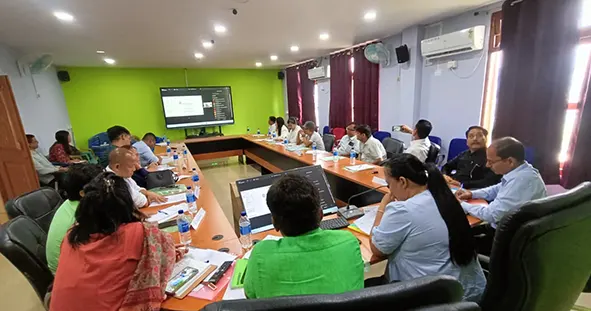
BASAR, 23 Jun: Multi-location ‘scientist-extension-farmers interface meetings’ on the Khet Bachao Abhiyan, balanced use of fertilisers, and natural farming system were jointly organised by the West Siang KVK and Basar (Leparada)-based ICAR AP Centre at Doji Doke and Limaroba villages in West Siang district on 10 and 23 June, respectively.
A total of 56 farmers and farmwomen participated in the programmes.
Addressing the participants, KVK Head Dr Manoj Kumar highlighted the importance of Khet Bachao Abhiyan, and elaborated various schemes of the Government of India for the farming community, the role and responsibilities of Krishi Vigyan Kendras (KVKs), promotion of natural farming, azolla cultivation for nutrient management and the importance of pulse-based systems for enhancing farm productivity and sustainability.
During the interface meetings, several important topics related to sustainable agriculture were covered by the scientists. Agronomy senior scientist Dr Sanjay Kumar Pandey delivered lectures on natural farming, green manure, importance of soil testing, pulses and oilseed mission, and millet-based farming systems. He emphasised the role of balanced nutrient management, soil health improvement, and diversification through millets, pulses, and oilseeds for ensuring sustainable agricultural development in Arunachal Pradesh.
ICAR AP Centre animal reproduction & gynaecologysenior scientist Dr Binod Kumar Dutta Borahdelivered an informative session on the importance of livestock rearing for nutritional security and livelihood improvement of tribal farmers, integrated farming systems, and farm waste management for enhancing soil fertility and resource recycling.
The Aalo agricultural development officer also delivered a lecture at Doji Deke village on integrated pest management, highlighting eco-friendly pest control measures and the adverse effects of indiscriminate use of chemical pesticides on human health and the environment.
FPO chairman Komjum Robin urged the farmers to take advantage of the interface meeting and apply the knowledge in their farming to protect the soil and harvest good crop and higher income.
Interactive farmer-scientist discussions were organised during both programmes, providing a platform for farmers to raise field-level issues and obtain scientific solutions from experts.
Seven vermicompost beds were distributed among the farmers for vermicompost production.