Editor,
With special reference to the 200 MW Lower Subansiri Project, Dollungmukh, District Kamle, and the loss of ancestral land.
Arunachal Pradesh is known as the powerhouse of India, but this power comes at the cost of our existence. A mega dam is not merely a concrete structure for us—it represents the drowning of our history, our identity, and our future. The experience of Dollungmukh should serve as a lesson for all proposed mega dams in the state.
The Dollungmukh lesson — what we have seen
The 2,000 MW Lower Subansiri Hydroelectric Project at Dollungmukh, District Kamle, on the border of Arunachal Pradesh and Assam, was proposed in the name of development. However, what it has given us includes:
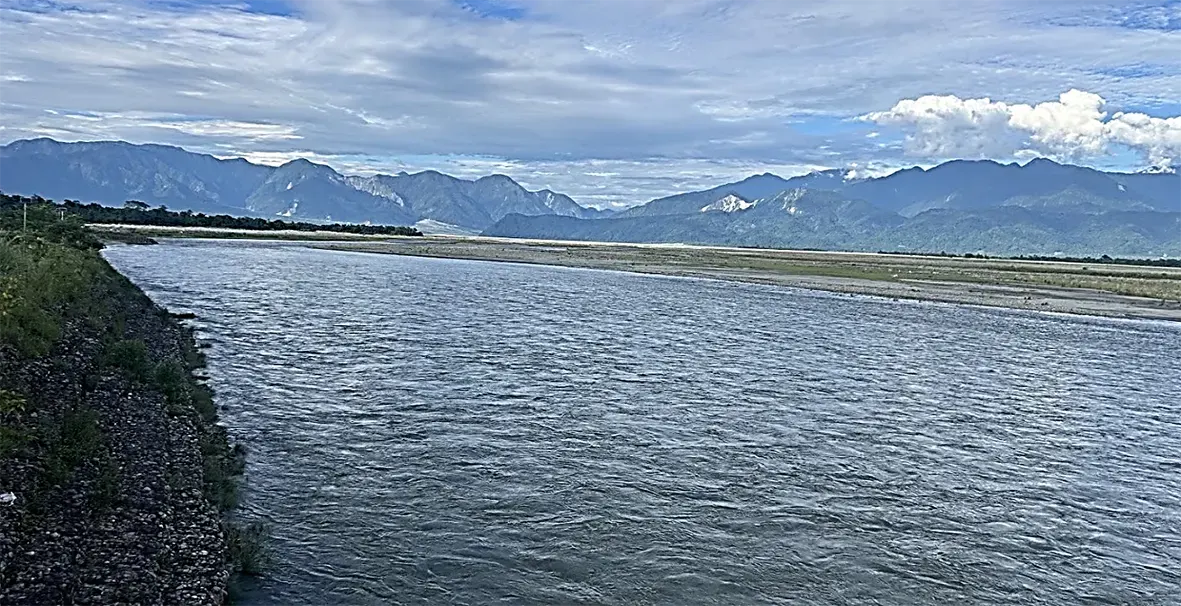
a) Downstream devastation: The natural flow of the Subansiri River has been disrupted. Villages in Dollungmukh face unprecedented artificial flooding during the monsoon and reduced river flow during the winter. Riverine ecology, fisheries, and fertile silt have been adversely affected.
b) Perpetual fear: People living downstream remain in constant fear of dam-induced flash floods and a possible dam-break scenario, particularly in a highly seismic Zone V area. The dam site itself has witnessed repeated landslides and construction delays due to the fragile Himalayan geology.
c) Broken promises: Local people were promised employment, rehabilitation, and 24-hour electricity. However, many affected families in Dollungmukh are still struggling for proper compensation and rehabilitation, and the people of Dollungmukh have yet to be properly notified as project-affected families (PAFs). The experience of Dollungmukh demonstrates the serious challenges that mega dams can create in the Eastern Himalayas.
Core disadvantages of mega dams in Arunachal Pradesh
1. Submergence of ancestral land and forest
Mega dams require thousands of hectares of land. For a tribal society, our land is not merely a commodity that can be bought with compensation money. Our jhum fields, community forests, sacred groves, and burial grounds of our forefathers may be submerged forever. Once submerged, they can never be returned.
2. Failure of R&R policy — what the government cannot give back
Under the R&R policy, the government may compensate for land and provide a small plot for rehabilitation and housing. However, the government cannot give back the mountains, the free-flowing rivers, the wildlife, and the culture that is deeply rooted in our history and in the emotions attached to the graves of our forefathers.
The government can provide a plot of land and some financial compensation, but it cannot give back the mountain where our clan deity resides. It cannot give back the free-flowing river where our rituals are performed. It cannot give back the forest where our mithuns graze, nor can it give back the graveyard of our ancestors, where our souls remain connected.
The government had taken a loan of ¹ 250 crore from NHPC to revive the APEX of the state, ¹ 17 crore for the construction of the Law College at Jote, and crores of upfront funds were allegedly misused. Similarly, recently, ¹ 40 crore allocated for jungle clearance and timber extraction was also allegedly misused by the DFO, Banderdewa Forest Division.
What, then, has the public of Dollungmukh received so far?
There is no adequate hospital or properly equipped healthcare facility, no sufficient school infrastructure, no reliable drinking-water supply system, and no proper all-weather road connectivity in several parts of the project area. As per the MoA and MoU, the prevailing condition of these essential services has caused considerable hardship to the local population, particularly to residents of remote villages and habitations situated within and around the project-affected area.
3. Displacement and cultural death
Our identity is tied to our village, our river, and our clan land. When a community is displaced from Dollungmukh or the Siang Valley, we do not merely shift houses—we uproot a culture.
The oral history, myths, rituals, and traditions linked to a particular river and mountain are lost when people are separated from their ancestral land. Financial compensation cannot replace an entire culture.
4. Ecological and seismic threat
Arunachal Pradesh lies in Seismic Zone V. The Himalayas are young and geologically fragile. Mega dams may increase concerns relating to reservoir-induced seismicity, massive landslides, and changes in river courses. Our rich biodiversity may also be fragmented and adversely affected.
5. Threat to livelihood
Our people depend on the river for fishing, agriculture, and water. Altering the natural flow of a river can seriously affect downstream livelihoods. Sand, fish such as the golden mahseer, and fertile floodplains are all part of the river ecosystem on which our communities depend.
6. The emotional pain — our ancestors’ land
For an outsider, it may be described simply as “land acquired.” For us, it is “Abo Aane”—our ancestral land.
This land was protected by our forefathers with their blood. Every stone and every bend of the river has a name and a story passed down by our grandparents. Our umbilical cords are buried in this soil. Our ancestors rest here.
To ask us to leave this land for a dam is to ask us to leave our mother. When the water rises over our village, it does not merely drown houses—it drowns our memories, our prayers, and our soul.
Dollungmukh is crying today. We do not want another Siang, another Dibang, to cry tomorrow.
Adv. Temi Pabo, Former vice-president, ANYA, Dollungmukh