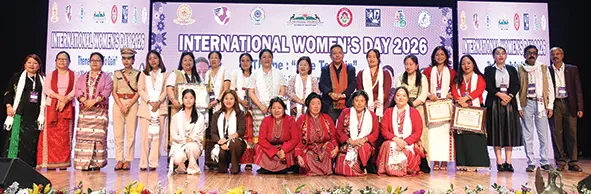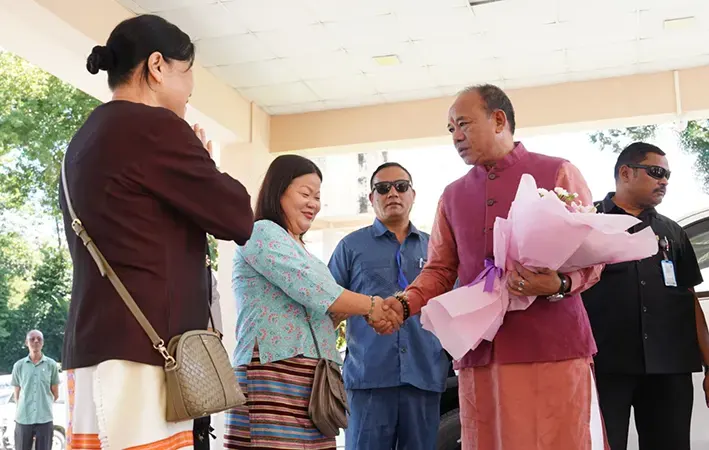

ITANAGAR, 29 May: National Commission for Women (NCW) Chairperson Vijaya Rahatkar stressed the urgent need for greater awareness, sensitivity, and inter-departmental coordination among stakeholders working for women’s safety and justice.
Addressing a training and capacity-building programme for protection officers, one-stop centre (OSC) personnel, counsellors, and other officials here on Friday, she highlighted the crucial role played by frontline institutions in ensuring timely support and justice for women.
Rahatkar said that several women continue to suffer in silence due to social pressure, financial dependence, and lack of awareness about their rights.
“Incidents of domestic violence often remain hidden within homes, making the role of protection officers and support systems even more significant,” she observed.
Emphasising the importance of legal awareness, the NCW chairperson stated that officials associated with women-centric services must possess comprehensive knowledge of laws such as the Protection of Women from Domestic Violence Act, POCSO Act, and other legislations related to women’s rights and protection.
She opined that without adequate understanding of these laws, it would be difficult to provide effective relief and justice to women in distress.
Rahatkar also highlighted the geographical challenges of Arunachal Pradesh, noting that remote and hilly regions require stronger institutional mechanisms and better-trained personnel to ensure that women in every corner of the state can access justice and support services.
She further called for stronger coordination among the Women and Child Development Department, the Arunachal Pradesh State Commission for Women(APSCW), the police, legal services authorities, district administration, and all related institutions to ensure comprehensive and timely response to women in crisis.
She stressed the need for an improved crisis response mechanism, emphasising that delays in handling cases can lead to severe consequences. She also encouraged the sharing of practical experiences and best practices among officials.
Rahatkar suggested the formation of dedicated communication groups for counsellors, case workers, medical support staff, and protection officers to facilitate better coordination and learning.
Reaffirming the commitment of the APSCW towards women’s safety, protection, rehabilitation, and empowerment, Rahatkar said that institutions must become more sensitive, responsive, and accountable,so that women can approach the justice system with confidence and trust.
She called upon all departments and institutions to work collectively towards building a society where every woman feels safe, respected, and empowered.
The programme aimed at strengthening the functioning of OSCs and enhancing awareness on women’s rights, protection mechanisms, mental health, legal provisions, and inter-departmental coordination for effective support to women in distress.
The technical session covered various important themes relating to the functioning of OSCs and women’s welfare.
Yakang Nani, state mission coordinator, SHEW, WCD Department, delivered a presentation on the objectives, functions, services, and responsibilities of OSC staff.
APSCW counsellor Dr Leeyir Ete spoke on mental health among women, emphasising the importance of psychological wellbeing and counselling support.
Naharlagun SDPO Rishi Longdo highlighted the role of the police in supporting survivors and ensuring coordination with OSCs.
Legal aspects concerning domestic violence, the POCSO Act, and BNS in respect to women were elaborated by Arunachal Pradesh State Legal Services Authority’s panel advocate Techi Nech. (DIPR)