
[ Bini Yurom ]
ITANAGAR, 2 Jul: The All Kebi Area Students, Youths, Development and Welfare Organisation (AKASYDWO) addressed a press conference at the Arunachal Press Club here on Thursday, highlighting the deteriorating condition of the Pitapool-Khunglo (Pith) road, a 28-kilometre stretch that has suffered extensive damage following recent cloudbursts, floods, and continuous landslides.
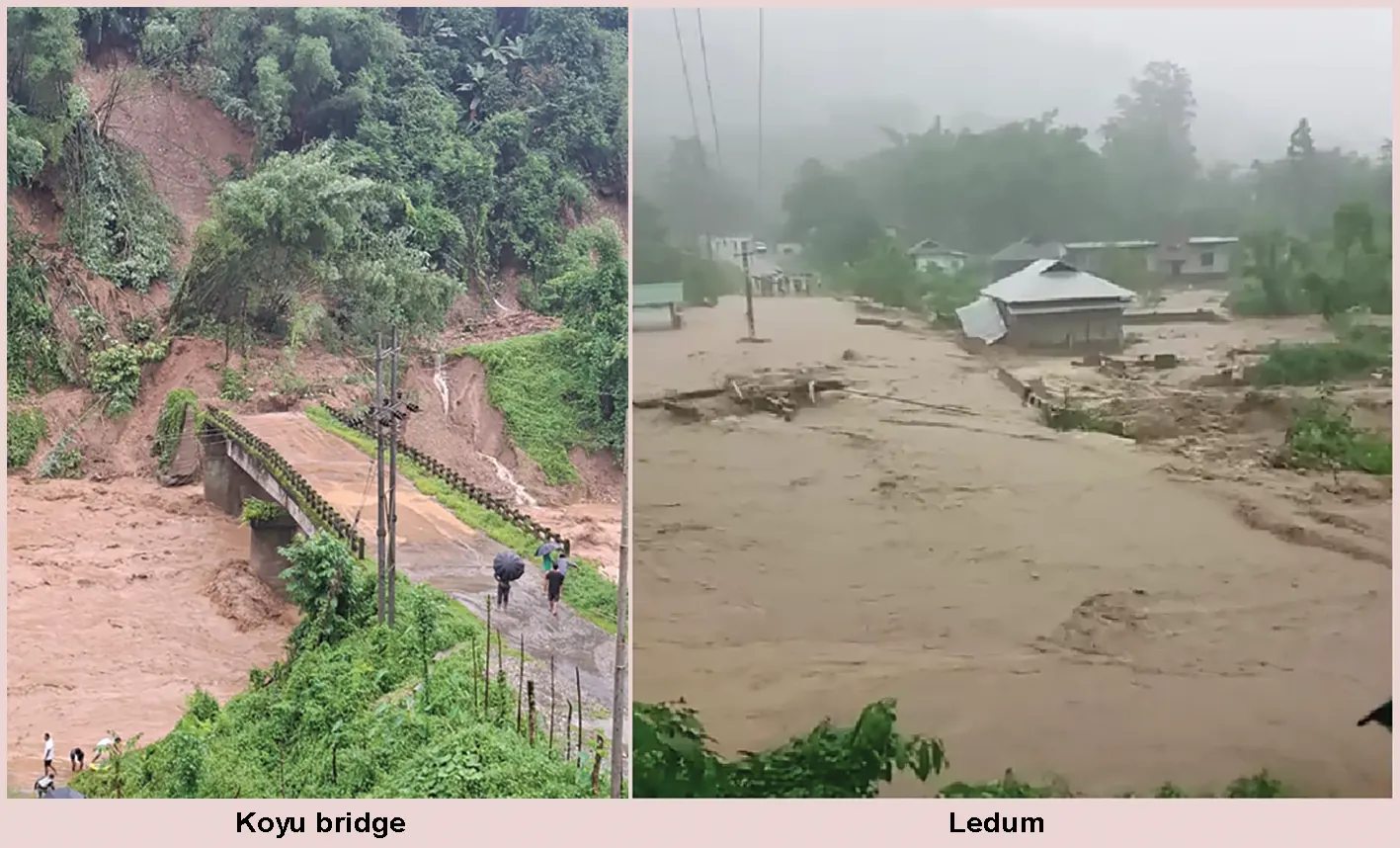
During the press conference, the organisation expressed serious concern over the road’s condition, stating that incessant rainfall and cloudburst-triggered floods have caused severe landslides and multiple road blockages, disrupting transportation and affecting the daily lives of the residents in the area.
The organisation said that the damaged road has made travel extremely difficult, hindering the movement of commuters, students and patients, and the transportation of essential commodities. The organisation noted that several portions of the road have become unsafe due to continuous landslides and erosion.
AKASYDWO chairman Taba Penka described the Pitapool-Khunglo (Pith) road as an important inter-district route that historically connected Papum Pare with Sagalee, Leporiang, and the western parts of Arunachal Pradesh when the erstwhile Lower Subansiri district was undivided. He alleged that, despite suffering severe damage similar to the Possa and Potin roads, the route has received little attention from the government or the media.
According to Penka, the road was originally constructed in 1986-87 using platform support structures, locally known as “grip” structures, and has since been divided into two administrative sections. He said that the recent floods and landslides have severely damaged several stretches, disrupting connectivity to interior villages.
He further alleged that the a project was sanctioned under the CRIF scheme on 1 April, 2022, at an estimated cost of Rs 34.67 crore, with the contract awarded to M/s DNL Enterprises, which quoted approximately Rs 18 crore for this road. Penka alleged that the quality of construction had been compromised, citing suspected substandard work, violations of the detailed project report (DPR), and possible corruption.
He informed the media that the AKASYDWO had submitted a formal complaint on 15 June to the chief minister’s office, the governor, Union Minister for Road Transport and Highways Nitin Gadkari, Union Minister and MP Kiren Rijiju, the ACB, CBI, ED, chief secretary, chief engineer, deputy commissioner, and other authorities concerned, seeking a thorough inquiry into the project.
Referring to the recent disaster, Penka said the organisation understood that government agencies were fully engaged in rescue and relief operations in the worst-hit areas. However, he alleged that the Pitapool-Khunglo road and several gram panchayat villages were overlooked, leaving residents without essential supplies.
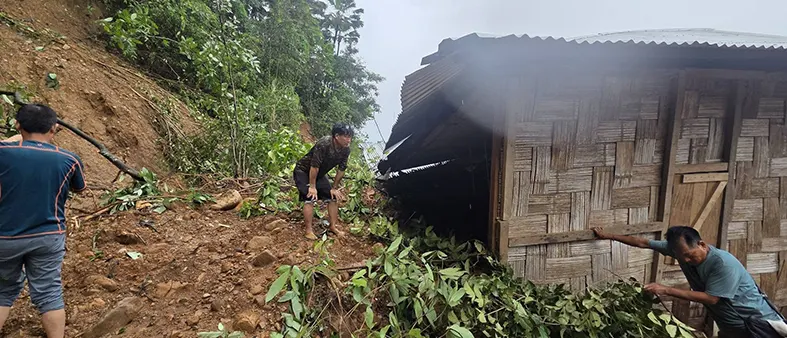
According to him, after discovering that Darbar Bridge had collapsed and villages remained cut off, the AKASYDWO undertook voluntary road clearance work between 28 and 30 June with support from local volunteers and well-wishers. He claimed that the initiative restored connectivity up to the affected gram panchayat area and enabled the movement of essential commodities.
Penka said the road could serve as one of the shortest and safest alternative routes while the heavily damaged Potin-Hoja road remains under restoration. He claimed that the Pitapool-Khunglo route to Doimukh measures about 97 kilometres, making it shorter than the alternative routes suggested in the government’s travel advisory.
He further alleged that while volunteers were clearing the road, officials initially encouraged the work but later instructed them to stop after receiving directions from “higher authorities.” He questioned why a purely humanitarian initiative was allegedly obstructed and demanded an explanation.
Penka also alleged irregularities in the distribution of relief materials, claiming that genuine beneficiaries, including his own mother, had been excluded from relief lists. He clarified that the concern extended beyond his family, and questioned the transparency of the beneficiary selection process.
The organisation urged the Public Works Department to take immediate action against any officials or agencies found responsible for negligence in the execution and maintenance of the project. It also called on the MLA, district administration, and other authorities to inspect all affected gram panchayat areas, restore road connectivity, deploy sufficient manpower and machinery, ensure uninterrupted supplies of essential commodities, and strengthen healthcare services in the affected villages. Penka appealed to the Anti-Corruption Bureau to register the complaint and conduct a field investigation into the road project.
He further demanded that all relief materials, compensation, and financial assistance be subjected to a social audit to ensure transparency and equal distribution.
Claiming that the disaster was not entirely natural, Penka alleged that extensive deforestation and road construction in the Sutumpu mountain range may have aggravated the floods and landslides.
Penka acknowledged the efforts of the district administration led by the deputy commissioner, the All Nyishi Youth Association (ANYA), the All Papum Pare Students’ Union (APPSU), the All Nyishi Students’ Union (ANSU), various NGOs, MLAs, political leaders, PRI leaders, religious leaders, and all individuals and organisations that came forward to assist the affected people.
He further expressed gratitude to Chief Minister Pema Khandu and union ministers Kiren Rijiju and Shivraj Singh Chouhan for their support and concern for the flood-affected people.
Addressing the media, AKASYDWO president Tada Abom described the Pitapool-Khunglo (Pith) road as a vital lifeline for the region. He alleged that despite its importance, the road had been neglected over the years. Abom claimed that the organisation possesses documentary evidence supporting its concerns regarding the project, and questioned why voluntary restoration work was allegedly halted during the emergency.