Editor,
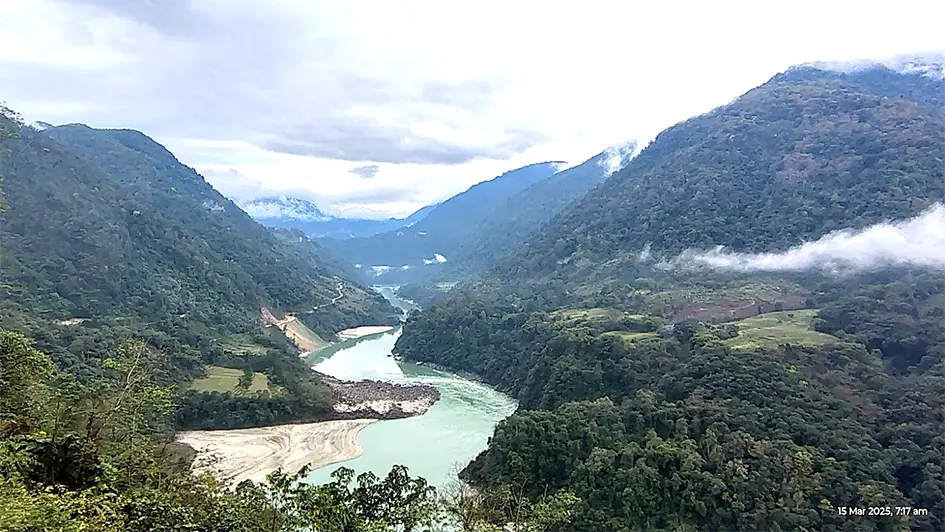
Opposition to large-scale dam construction in Arunachal Pradesh has been a decades-long movement driven by indigenous communities and environmentalists, centring on concerns regarding displacement, cultural erosion, ecological destruction, seismic risks, and the absence of free, prior, and informed consent (FPIC) procedures.
Driven by state-level policies aimed at harnessing massive hydroelectric potential, formal proposals proliferated between the 1990s and the 2000s. The Lower Subansiri project (2,000 mw), located on the border between Assam and Arunachal, sparked intense opposition, starting in the mid-2000s. Groups such as the Subansiri Bachao Samiti, the All Assam Students' Union, and the Krishak Mukti Sangram Samiti highlighted issues including biodiversity loss, the risk of downstream flooding, and the lack of consultative processes.
Protests intensified following floods in 2008 and the unannounced release of water from the dam.
Between 2008 and 2009, groups like the Siang People's Forum and the Siang Indigenous Farmers' Forum (SIFF) organised petitions, road blockades, and legal challenges. In 2011, a petition garnering over 1,00,000 signatures called for a suspension of the projects. The SIFF filed a public interest litigation (PIL) in 2014. In 2022, the Gauhati High Court issued an order, cancelling dozens of planned dam projects in the Siang River basin, citing irregularities in the approval process. The Dibang Multipurpose Project also faced similar resistance from the Idu-Mishmi community (spanning 2007 through the 2010s), a period marked by disrupted public hearings, the deployment of paramilitary forces, and reports of coercive tactics.
Between 2024 and 2026, protests against the pre-feasibility study (PFR) escalated, particularly during the forced deployment of Central Armed Police Forces (CAPF) into the Siang region to conduct the study, manifesting as peaceful marches, rallies, and blockades in villages such as Parong, Geku, Beging, Komkar, and Riew.
Throughout this period, activists and community leaders faced persistent legal and security risks. SIFF members and lawyers Ebo Mili and Bhanu Tatak, along with Dugge Apang, repeatedly encountered preventive detention, demands to sign 'good behaviour bonds', police FIRs, and allegations of intimidation.
Notably, in July 2024, Mili and Apang were detained (under BNSS preventive detention provisions) ahead of a visit by the union power minister, with police citing potential for public disorder. In September 2025, immigration authorities at the Delhi Airport prevented Bhanu Tatak from boarding a flight to Ireland for a three-month academic programme at Dublin City University, as the Arunachal Pradesh Police had issued a 'lookout circular' against her.
Between August and September 2026, the Central Bureau of Investigation (CBI) initiated a case against Bhanu Tatak under the Foreign Contribution (Regulation) Act (FCRA), alleging that she had received foreign funds amounting to Rs 17.6-20.94 lakh without prior permission.
Currently, the situation in the Siang region remains tense, while the SIFF and the Adi Bané Kébang-United continue to oppose the Siang Upper Multipurpose Project (SUMP). Chief Minister Pema Khandu has warned of action against government officials opposing the project, which is designated as a 'national-level project', and has announced plans to establish camps in the Siang and Upper Siang regions.
Article 19 of the Indian Constitution guarantees all citizens the right to freedom of speech and expression, including the right to express dissent through slogans, speeches, banners, and other means. Criminal liability arises only in cases involving violent gatherings, the prolonged occupation of public roads that severely infringes upon the rights of others, property damage, or situations that escalate into unlawful assemblies or riots. As the protests against the SUMP involved none of these actions, the detention of Ebo Mili, Bhanu Tatak, and Dugge Apang clearly violates the spirit of the Constitution. We call for protection of the right of the activists and organisations to speak out freely and on an equal footing.
Lohit Sharma,
Social activist