
[ Tadar Amas ]
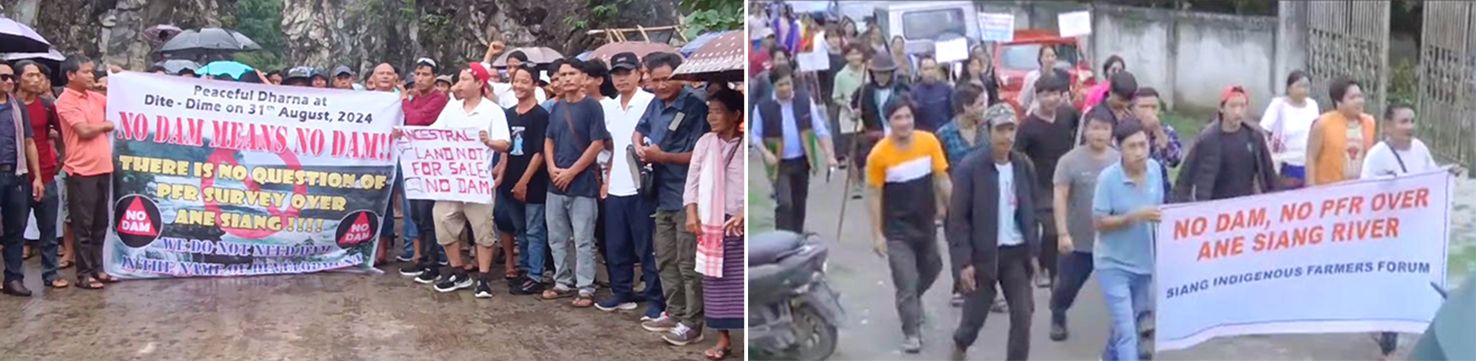
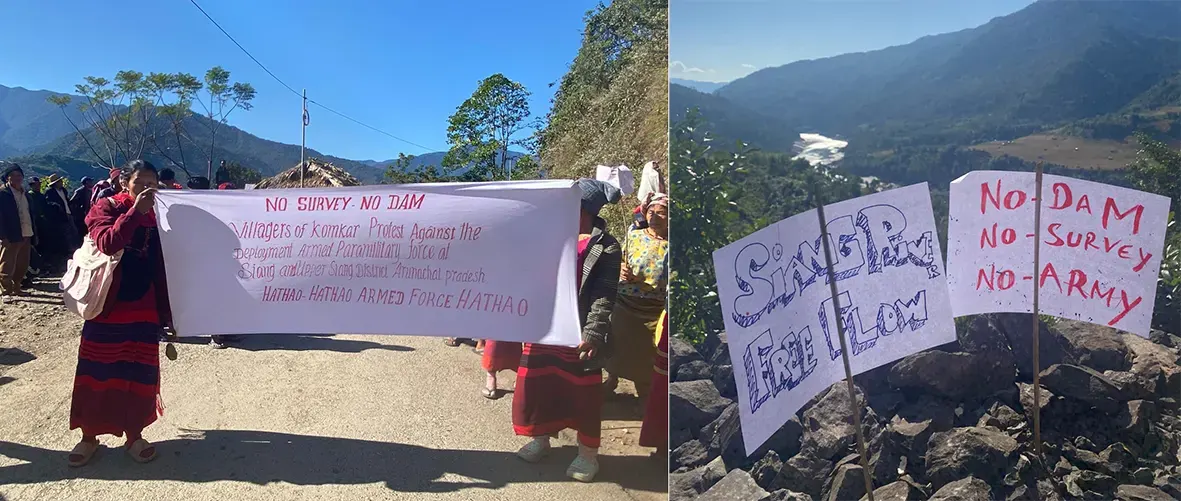
The proposed Siang Upper Multipurpose Project (SUMP) has become one of the most widely discussed development issues in Arunachal Pradesh. While concerns regarding displacement, environmental impacts, indigenous rights and the future of the Siang River are understandable, it is equally important to examine the project from a scientific, engineering and long-term national security perspective.
As a civil engineer with practical experience in dam-related projects, including pre-feasibility reports (PFR), social impact assessments (SIA), Forest Rights Act (FRA) matters and other impact assessment studies, I would like to share my professional observations and personal perspective on the importance of scientific investigation before arriving at any final conclusion.
The Siang River is not merely a source of water. It is deeply connected with the culture, traditions, livelihoods and identity of the indigenous communities of Arunachal. Any major development involving this river must therefore be approached with responsibility, transparency and respect for the people. At the same time, we cannot ignore the changing geopolitical and environmental circumstances surrounding the river.
China's upstream dam and its possible future implications
China commenced construction of its massive hydropower project on the Yarlung Tsangpo River in July 2025. The river enters India through Arunachal, where it is known as the Siang, before joining other rivers to form the Brahmaputra. The development of large-scale hydropower infrastructure upstream raises several important questions about future water management, environmental security and disaster preparedness in downstream regions.
Water security: Upstream hydropower operations could potentially influence the seasonal distribution and timing of river flows. Although actual consequences depend on the project's design and operation, India must develop its own scientific understanding of these possibilities.
Sudden releases and extreme floods: Unexpected reservoir operations, natural disasters, landslides or structural emergencies upstream could create additional challenges for downstream communities. Reliable monitoring, early-warning mechanisms and disaster management infrastructure are essential.
Sediment and river ecology: Himalayan rivers carry substantial sediment loads. Large hydropower developments can influence sediment movement, river morphology, aquatic ecosystems and downstream agricultural activities.
Climate change and seismic risks: The Eastern Himalayan region is geologically sensitive and experiences significant rainfall, landslides and seismic activity. Any proposed major dam must undergo detailed geological, hydrological and seismic safety investigations.
Regional and national significance: The Siang river system is important for downstream regions of Assam and Bangladesh. Long-term water management, flood forecasting and regional cooperation are matters of wider public interest.
These concerns should not be interpreted as predictions that China's dam will necessarily cause severe downstream damage. The precise consequences remain uncertain and require reliable scientific data, technical evaluation and continued monitoring.
Why the proposed SUMP deserves scientific examination
The proposed SUMP could offer several potential benefits if its technical feasibility, environmental sustainability and social acceptability are established. One of its most significant proposed objectives is flood moderation. A properly designed and operated storage reservoir may help regulate certain high-flow events and reduce downstream flood risks. However, no dam can guarantee complete protection against extreme floods, and its effectiveness must be demonstrated through detailed hydrological modeling.
The project could also contribute to renewable electricity generation, employment opportunities, infrastructure development and economic activity in Arunachal. Local engineers, contractors, transporters, skilled workers, entrepreneurs and businesses may benefit. Improved roads, bridges, communication facilities and supporting infrastructure could contribute to regional development. Nevertheless, potential economic benefits must be carefully evaluated against environmental, social and financial costs.
The importance of a PFR
Conducting a PFR does not automatically mean that a dam has been approved for construction. A PFR is an initial technical investigation intended to assess whether a proposed project is worth examining further. It may include preliminary studies of river hydrology, geological conditions, seismic hazards, potential dam locations, reservoir capacity, engineering challenges, environmental sensitivities, project costs and possible social impacts.
China's upstream dam is already under construction, while India's proposed Siang project remains at the feasibility stage. This makes scientific investigation particularly relevant. We must examine future scenarios involving upstream water regulation, sudden releases, extreme floods, sediment movement and seismic hazards. Supporting scientific studies is not the same as supporting construction at any cost; nor does allowing investigation mean that affected communities' concerns should be ignored.
Indigenous rights, environmental protection and public participation
Having worked on social impact assessment and Forest Rights Act-related matters, I understand that infrastructure development is not limited to engineering calculations and construction activities. Every major project has a human dimension. Land, forests, rivers and traditional settlements are closely connected with the lives and identities of indigenous communities.
The concerns of the affected villages must be heard with seriousness and respect. Proper public consultation, assessment of displacement, fair compensation, rehabilitation and resettlement planning, recognition of applicable forest rights and environmental safeguards must be integral to the process. Any eventual decision must comply with applicable laws and statutory approval requirements, including environmental and forest clearances where necessary.
Engineering decisions must be based on evidence
Major infrastructure decisions should be guided by technical evidence, rather than assumptions or incomplete understanding. Can the proposed reservoir meaningfully reduce downstream flood risks? How would it perform under extreme rainfall? What are the geological and seismic challenges? How might China's upstream development affect future river flows? What would be the environmental and social consequences? Can affected communities be adequately protected? These questions deserve transparent, scientific answers.
The purpose of engineering is not simply to construct large structures. It is to identify problems, evaluate solutions, understand risks and develop infrastructure that serves society safely and responsibly.
Looking beyond today's debate
China's upstream hydropower development represents an important change in the Yarlung Tsangpo-Siang-Brahmaputra river system. Its precise downstream consequences remain uncertain, but uncertainty itself is a reason to strengthen scientific research, hydrological monitoring and disaster preparedness. We must consider not only the immediate debate but also the possible challenges future generations may face.
Arunachal Pradesh has enormous hydropower potential, rich natural resources and strategic geographical importance. Responsible development could contribute to the state's economy and India's energy security, but it must be balanced with environmental sustainability, public safety and indigenous rights.
Conclusion: Development with responsibility
My personal view is that the SUMP should be examined through a balanced, scientific and people-centred approach. We should neither reject scientific investigation without understanding its purpose, nor assume that construction is justified before the necessary studies and consultations are completed.
Let engineers undertake the required investigations. Let independent experts examine the findings. Let policymakers evaluate the national and regional implications. Most importantly, let the people directly affected have a meaningful voice in the process.
The objective should not simply be to build a dam. It should be to determine whether a safe, sustainable and socially responsible solution exists for the long-term protection and development of the Siang River basin.
Let science guide development, let people's rights remain protected, and let our decisions today safeguard the generations of tomorrow. (The contributor is managing director, GoArunachal, and a civil engineer with experience in dam-related projects. The views expressed are personal and intended to encourage informed public discussion on the proposed SUMP.)