Monday Musing
[ M Doley ]
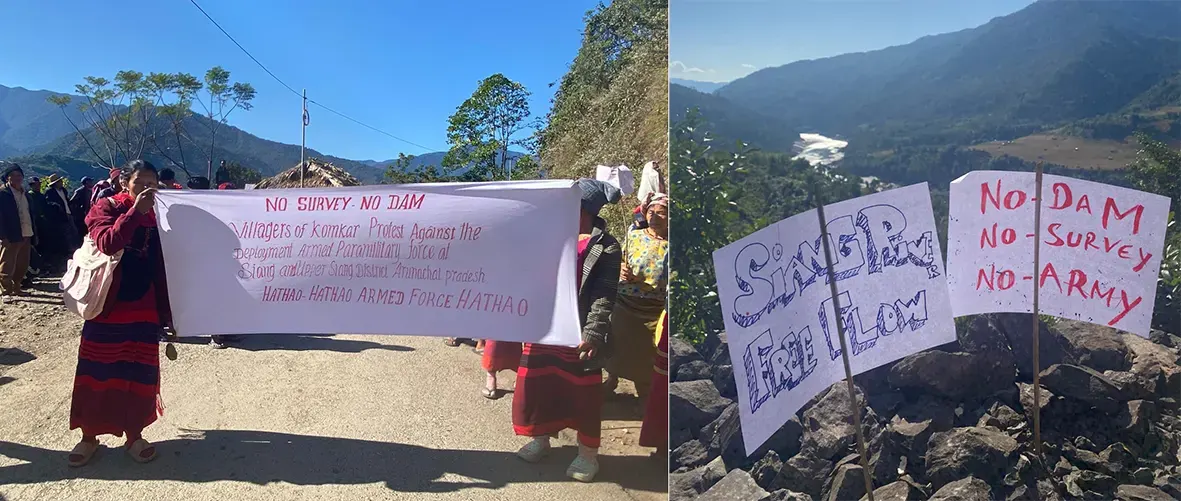
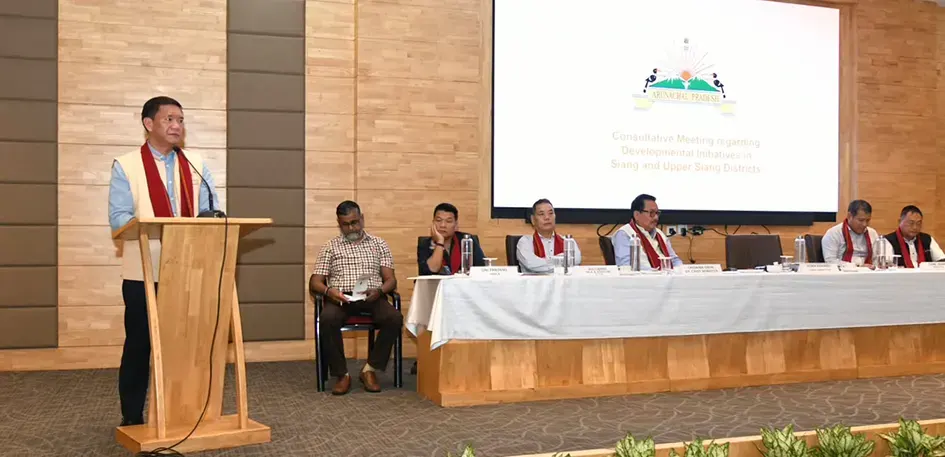
The Centre's push for the ambitious Siang Upper Multipurpose Project [SUMP], aimed at countering China's massive dam activities upstream, has hit a roadblock with affected villagers refusing to make way for it. While the government is making every effort to persuade the affected villagers, the latter have vowed to resist the project at all costs.
The indigenous communities living along the Siang River say that the dam, if constructed, would uproot their centuries-old way of life, as their culture, livelihoods and identity are deeply connected to the river.
But the Centre wants a storage dam capable of holding billions of cubic metres of water to counter China's dam and control floods downstream.
Declared as a national project, the SUMP is meant to serve multiple purposes. Apart from generating clean energy, the project is planned to regulate water flow by storing excess water and releasing it in a controlled manner.
There is fear that water diversion or sudden release of excess water from China's mega dam on Yarlung Tsangpo in Tibet, which is roughly 50 km from Indian territory, would drastically reduce water flow or can trigger devastating floods downstream. The SUMP, with its proposed storage capacity, could absorb large volumes of water, thereby averting floods downstream in the event of sudden release by China.
Apart from the Siang (Yarlung Tsangpo in China), several rivers that enter India originate in China. India and China do not have a water-sharing treaty on how waters of these shared rivers are to be managed between the two countries. China, therefore, holds the advantage of controlling water flow into India at any time, raising serious concerns over India's water security.
The project is facing resistance and criticism not only from local populations but also from NGOs and organisations across the country.
Expressing solidarity with the protesting villagers, over 30 NGOs and organisations last year sought an assurance from the government that no further activity related to the pre-feasibility survey is carried out without free, prior and informed consent of the local communities, and that the Forest Rights Act be implemented in letter and spirit in Arunachal Pradesh.
As per reports, at least 27 villages in Siang and Upper Siang districts are feared to be affected by the proposed project.
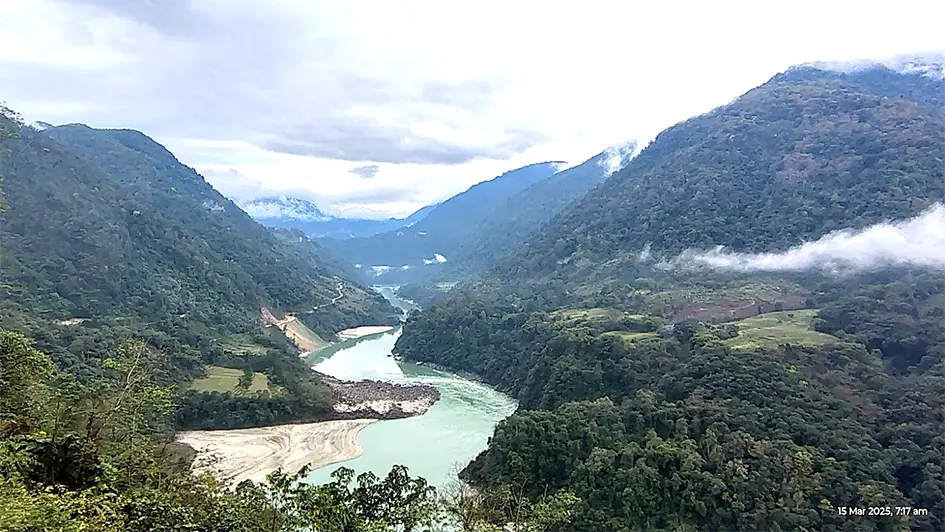
When a free-flowing river like the Siang is blocked, water has nowhere to go but to flow backwards, submerging large areas upstream, leading to loss of fertile lands, destruction of wildlife habitats and displacement of inhabitants - the very outcome the villagers fear.
The region is home to more than 400 bird species, including Schedule I species, rare and threatened orchids, canes and bamboos, and mammals such as red pandas and clouded leopards, making it a biodiversity hotspot. If built, the dam can pose a serious threat to the rich biodiversity.
While the project is seen as a response to China's dam activities upstream and a key infrastructure to secure India's energy and water needs, it remains to be seen how the government will strike a balance between national interest and the legitimate concerns of the affected people over loss of livelihood, submergence and displacement amid the ongoing protests.