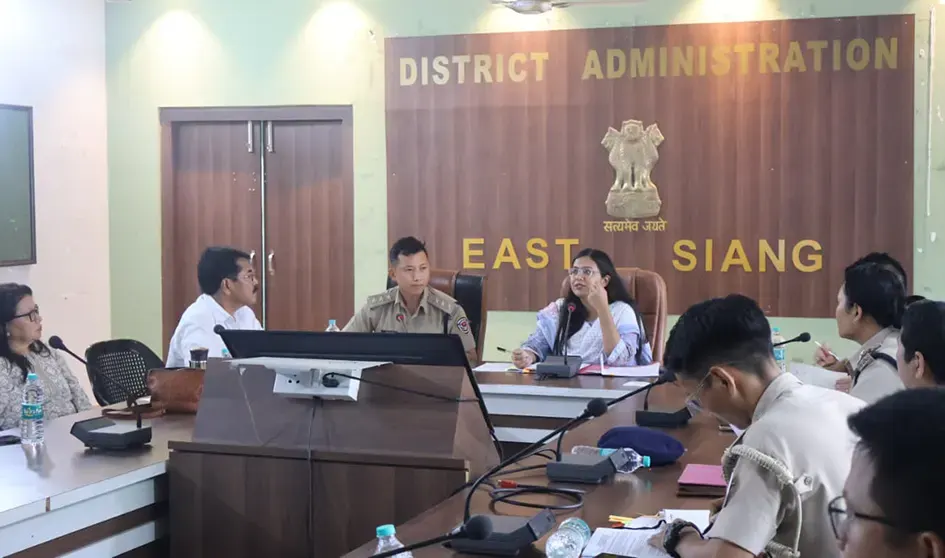

KHONSA, 27 Aug: With a renewed sense of urgency following a recent measles alert, the Tirap district administration on Tuesday brought together health officials, administrators and field workers under one roof to chart a stronger, more coordinated response to immunisation challenges.
The District Task Force on Immunisation (DTFI) meeting, held at the mini secretariat here, chaired by Deputy Commissioner Badonlum Tawsik, focused not just on data and targets, but on the real risks faced by communities with low vaccination coverage.
Addressing the participants, District Medical Officer Dr Bimal Ratan acknowledged gaps in immunisation levels and stressed that all stakeholders, including doctors and nursing and medical staff, must take full responsibility to ensure that every child is vaccinated, warning that strict action would be taken against any lapse in duty.
DRCHO Dr J Thingnok presented a detailed health profile of the district, highlighting both progress and pressing concerns. She addressed the ongoing measles outbreak and pointed to persistent misconceptions around vaccination as a key hurdle.
Stressing the importance of grassroots accuracy, she called for timely reporting and strict data verification by ASHA facilitators, noting that "reliable data is the backbone of effective response."
District Surveillance Officer Dr K Socia spoke on ongoing initiatives under the Non-Communicable Diseases (NCD) programme and the National Tobacco Control Programme (NTCP). He reminded the attendees of the legal safeguards under the Cigarettes and Other Tobacco Products Act (COTPA), particularly the prohibition of tobacco sale within 100 yards of educational institutions, and called for stricter enforcement at the local level.
WHO Regional Surveillance Medical Officer Dr Bala Ganesa Kumar SR traced the timeline of the measles alert. The outbreak was flagged on 17 August, followed by rapid field verification and the formation of an 'immediate response team'. However, he cautioned that low vaccination coverage leaves the district vulnerable. Drawing parallels with last year's outbreak in Longding, he underscored the need for micro-planning and intensified immunisation drives to prevent further spread.
The deputy commissioner reiterated that the immediate priority is to significantly raise measles vaccination coverage. Emphasising that effective health service delivery depends on seamless coordination, he assured of full support from the district administration.
"This is a shared challenge, and it will require a united, sustained effort from all of us," he said, calling for closer collaboration between health institutions and administrative machinery. (DIPRO)