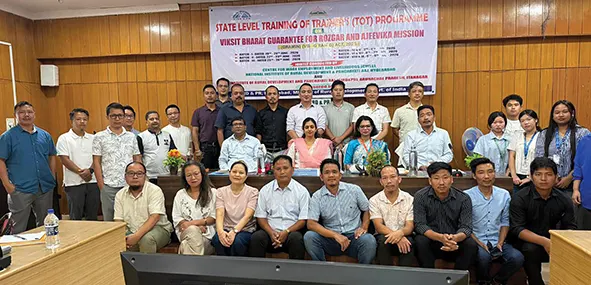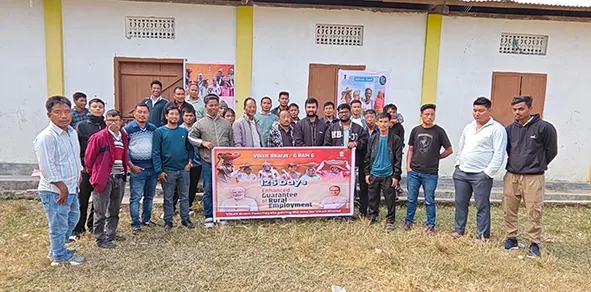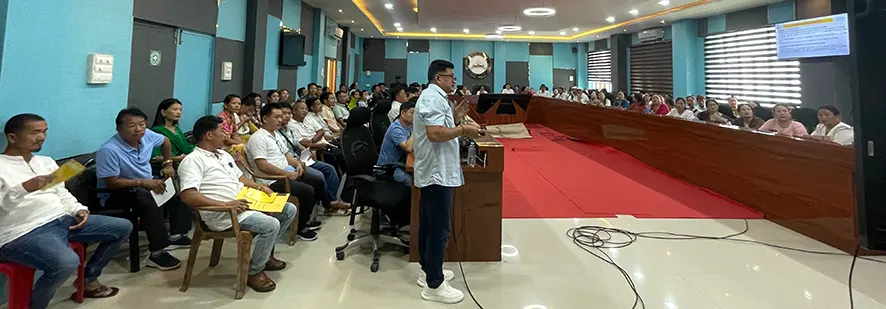

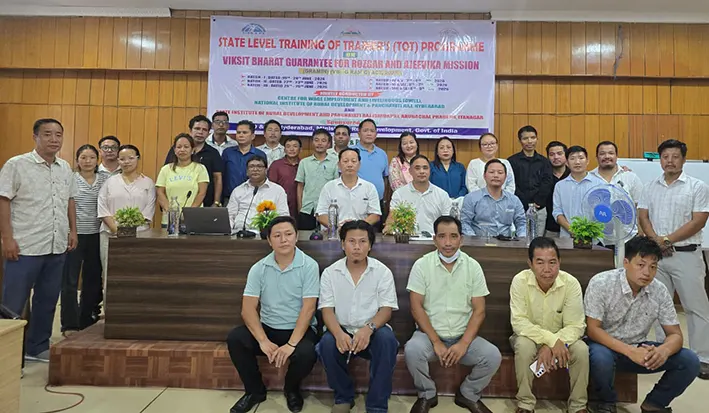
ITANAGAR, 6 Jul: A two-day state level training of trainers (ToT) programme for Batch 6 and Batch 7 on the Viksit Bharat Guarantee for Rozgar and Aajeevika Mission (Gramin) (VB-G RAM G) Act, 2025, being organised by the State Institute of Rural Development & Panchayati Raj (SIRD&PR), got underway here on Monday.
The training programme is being jointly organised by the Centre for Wage Employment and Livelihoods, National Institute of Rural Development & Panchayati Raj (NIRD&PR), Hyderabad, and the SIRD&PR.
The inaugural programme witnessed active participation of subdivisional officers, circle officers, block development officers, rural engineering extension officers, and other field-level functionaries representing Changlang, Kurung Kumey, Tirap, Longding, and Papum Pare districts.
The objective of the programme is to build a strong pool of master trainers for effective implementation of the newly introduced VB-GRAM G Act across the state.
The inaugural programme, coordinated by SIRD&PR faculty members Rodo Bui and Tamar Baki, covered key thematic areas essential for successful implementation of the Act, including institutional architecture at the state, district, block and gram panchayat levels; objectives and key features of the VB-G RAM G Act; categories of permissible works and eligibility criteria; financial management system and fund flow mechanisms; planning, execution, monitoring and convergence of rural employment and livelihood activities; transparency, accountability and social audit mechanisms; roles and responsibilities of implementing agencies and field functionaries; digital reporting, management information system (MIS), and other operational guidelines.
The technical sessions were delivered by resource persons including Deputy Director Dr Narayana Sahoo, Dr Likha Kiran, Dr Mihin Lali, SW Bagang, and Pebom Doyom.
The resource persons provided comprehensive insights into the operational framework, implementation strategy, financial procedures, transparency mechanisms, and technological interventions under the new Act.
The participants actively engaged in interactive discussions, group exercises, practical case studies, and experience-sharing sessions, enabling them to gain a deeper understanding of the implementation modalities of the VB-G RAM G Act.
The programme also focused on strengthening institutional capacity to ensure transparent, accountable, and efficient delivery of wage employment and livelihood opportunities in rural areas.
Speaking on the occasion, the resource persons emphasised that the VB-G RAM G Act represents a significant milestone in strengthening rural livelihoods, sustainable asset creation, transparent governance, and community participation. They encouraged all implementing officers to act as master trainers and facilitate effective dissemination of knowledge at the district, block, and gram panchayat levels for successful implementation of the Act.
The inaugural programme concluded with an interactive feedback session, during which the participants expressed confidence in their ability to implement the provisions of the VB-G RAM G Actin their respective jurisdictions.