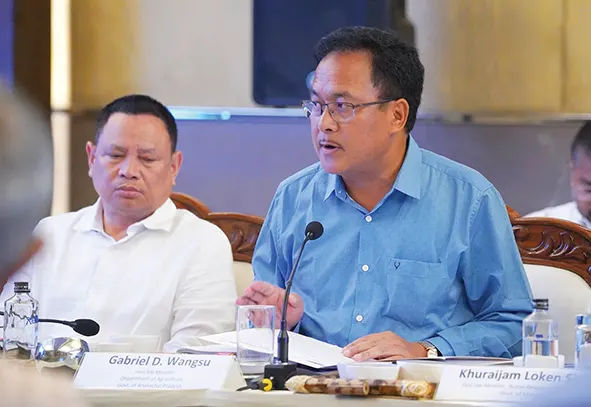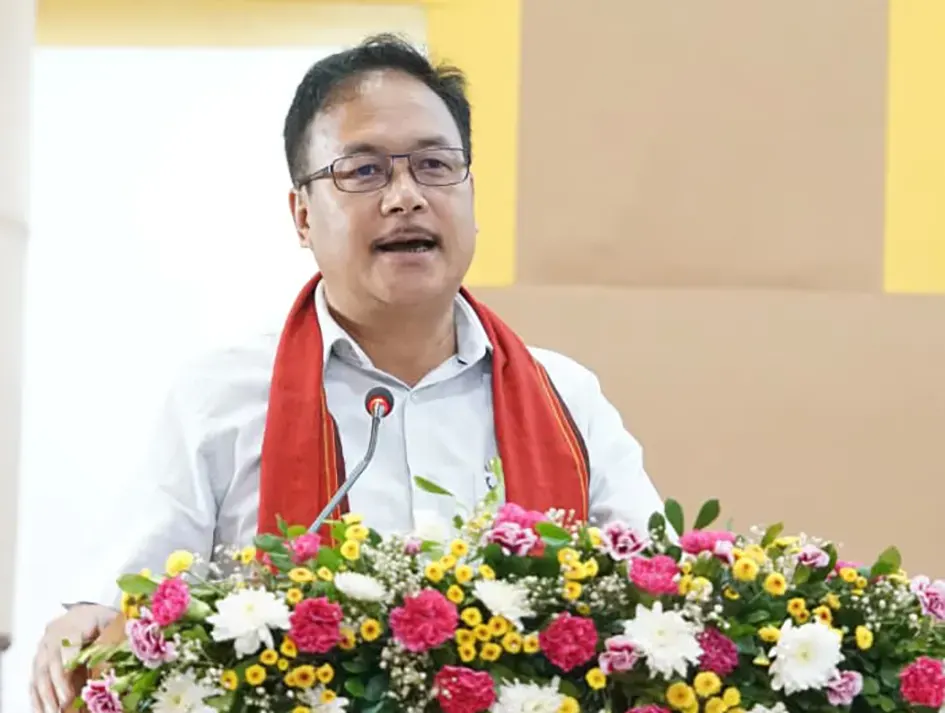
NAHARLAGUN, 21 Sep: Agriculture Minister Gabriel D Wangsu stressed the need for stronger collaboration among the state government, the Indian Council of Agriculture Research (ICAR) and other institutions to harness the agricultural potential of Arunachal Pradesh.
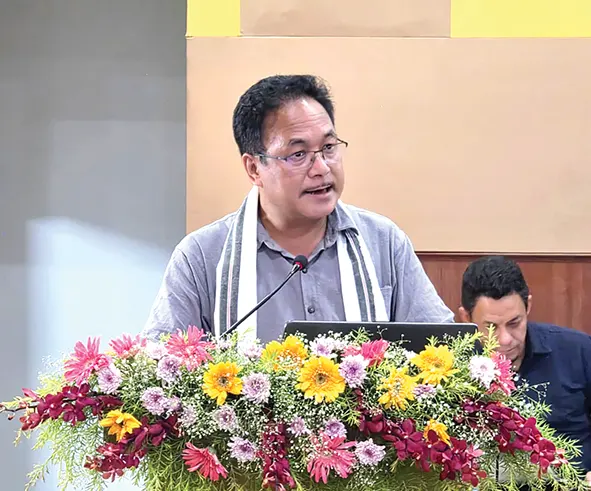
Addressing a consultative meeting here on Monday, Wangsu said that scientific innovation, sustainable and climate-resilient practices and stronger value chains are important, along with focused and coordinated interventions responsive to the state's diverse agro-climatic conditions and the requirements of its farming community.
He said that research and institutional expertise should translate into practical field-level solutions and better economic opportunities for farmers.
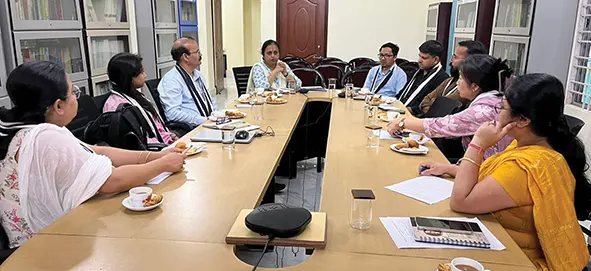
The meeting, organised by the ICAR Research Complex for North Eastern Hill Region (ICAR-NEH), Umiam, Meghalaya, in collaboration with the Agriculture and Allied Departments, GoAP, was held to prepare a comprehensive action plan for the development of agriculture and allied sectors of Arunachal.
The consultation focused on evolving a coordinated, practical and outcome-oriented action plan for accelerating the growth of agriculture and allied sectors in the state, with emphasis on scientific research, technology adoption, institutional collaboration and convergence of programmes and schemes.
A major focus was on leveraging the expertise of the ICAR for strengthening the state's identified USP crops, particularly kiwi, through research and technology development, varietal improvement, post-harvest management, value addition and stronger market linkages. The consultation also explored ways to strengthen the interface between research institutions and the state's field-level programmes.
The proposed mentorship of the State Horticulture Research and Development Institute (SHRDI) by the ICAR-NEH was another important area of focus. The proposed collaboration is aimed at strengthening the institute through technical guidance, capacity building, joint research, knowledge exchange and institutional networking.
The consultation further highlighted the importance of scientific validation and certification of natural farming practices, including on-farm validation, quality assurance and development of an appropriate certification framework to facilitate wider adoption of suitable practices under the diverse agro-climatic conditions of Arunachal Pradesh.
The proposed action plan will envisage a comprehensive and time-bound framework of three years, identifying priority areas, interventions, programmes and schemes, along with clear responsibilities and mechanisms for monitoring and evaluation.
It is intended to align scientific knowledge and institutional expertise with the specific needs and opportunities of Arunachal.
The interaction also underscored the importance of a farmer-centric and region-specific approach, with greater emphasis on productivity enhancement, sustainability, climate resilience, capacity building, post-harvest management, value addition and market connectivity.