[ AN Mohammed ]
What global warming means for us
Global warming is the long-term rise in the Earth's average surface temperature, caused primarily by the accumulation of greenhouse gases - chiefly carbon dioxide (74 percent), methane (18-19 percent) and nitrous oxide (5-6 percent) - in the atmosphere.
These gases trap heat that would otherwise escape into space. Climate change is the broader set of consequences that follows: shifting weather patterns, more extreme heat, heavier rainfall in some places, prolonged droughts in others, rising seas, melting ice and disrupted ecosystems.
Human activity since the Industrial Revolution is the dominant cause of the warming recorded since the mid-twentieth century.
The Earth's average temperature before large-scale industrialisation stood at about 13.7°C; human activity has since warmed the planet by more than 1°C. Every fraction of a degree matters. Crossing roughly 1.5-2°C above pre-industrial levels sharply raises the risk of irreversible tipping points - the collapse of major ice sheets, dieback of the Amazon rainforest, large-scale permafrost thaw releasing further methane and CO?, disruption of ocean currents, and widespread coral reef loss. Once triggered, many of these processes become self-reinforcing and cannot be stopped on human timescales, locking in sea-level rise and ecosystem shifts for millennia.
We are already near, or within, the risk zone for several of these thresholds - and delay only multiplies the eventual, irreversible damage.
A region on the frontline
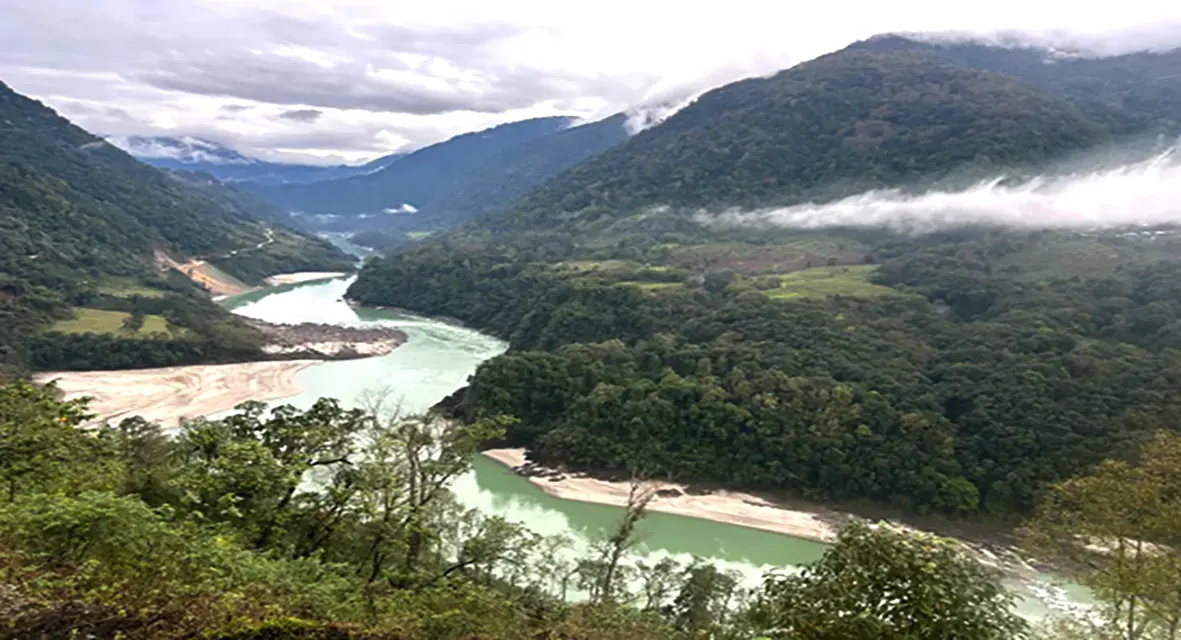
Nearly half the world's population now lives in regions considered climate hotspots, from small island states to the Himalayan belt. Northeast India is among the most climate-sensitive parts of the country. The region is highly exposed to river flooding along the Brahmaputra and Barak basins, landslides and soil erosion in the hills, shifting monsoon patterns, biodiversity loss, and the effects of glacier retreat in the Eastern Himalayas - even as its adaptive capacity remains comparatively low.
Assam bears the brunt of this exposure. Nearly 40 percent of the state's land is extremely flood-prone, and in recent years floods have displaced millions, submerged tens of thousands of hectares of cropland, claimed lives and caused enormous economic loss. The region is also settling into a harsher flood-drought cycle - intense rainfall bursts followed by longer dry spells, with drought weeks during the monsoon projected to rise across Arunachal Pradesh, Assam, Meghalaya and Nagaland. Mountain springs in Arunachal and Meghalaya are drying causing water scarcity, glacial retreat is accelerating, and the risk of glacial lake outburst floods is growing. Agriculture, the livelihood of the majority, is under severe stress from siltation, erratic rainfall and rising temperatures. These are not distant threats; they are already rewriting the ecological and economic future of the Northeast.
Where the emissions come from
Fossil fuel combustion remains the overwhelming driver of global warming, accounting for the large majority of global greenhouse gas emissions. The energy sector - electricity, heat, industry and buildings - contributes roughly three-quarters of total emissions when all energy uses are counted, with electricity and heat generation alone responsible for about a third.
A typical Indian coal-fired plant burns roughly 0.5 to 0.7 kg of coal for every unit of electricity generated, and burning a kilogram of coal releases about 2.5 kg of carbon dioxide - so a coal-based unit of power typically carries a footprint of 1 to 1.5 kg of carbon dioxide, well above the roughly 0.4 kg per unit from natural gas.
India's installed power capacity stands at approximately 552 gw - about 251 gw (45.5 percent) thermal, 240 gw (43.4 percent) renewable, 52 gw (9.4 percent) hydropower and 9 gw (1.6 percent) nuclear - against annual generation of roughly 1,830 billion units and a peak demand that touched 270.82 gw (168.94 billion units) in May 2026. Yet, installed capacity and actual output diverge sharply: coal-based plants still generate nearly three-fourths of India's electricity, because they run through most hours of the day, while solar and wind remain intermittent.
Transport adds significantly to the burden - India's transport sector emits an estimated 353 million tonnes of greenhouse gases annually, over 90 percent of it from road vehicles, with a litre of petrol releasing about 2.31 kg of carbon dioxide and a litre of diesel about 2.68 kg.
Land-use change and deforestation add further pressure. India's forests absorb an estimated 150 million tonnes of carbon dioxide each year, and a mature tree can store one to three tonnes of carbon dioxide over its lifetime - but forest loss across Assam, Arunachal, Nagaland and other Northeastern states, driven by shifting cultivation, infrastructure expansion and population pressure, is steadily eroding this natural carbon sink, worsening both local warming and downstream siltation and flooding in the Brahmaputra valley.
Why we cannot simply switch off coal
An abrupt shutdown of thermal power, without adequate renewable capacity, storage and grid infrastructure to replace it, would be economically self-destructive. India still depends on coal for the majority of its actual electricity generation. A sudden loss of this baseload power would trigger widespread blackouts, halt industrial production, disrupt agriculture and services, and cascade into unemployment, inflation and slower growth, with stranded assets and local economic collapse around thermal plants and mining regions. What the moment demands is not an abrupt exit but a just and carefully sequenced transition.
India has, in fact, made real progress along this path. The country has committed to net-zero emissions by 2070, and non-fossil capacity crossed 50 percent of total installed capacity by mid-2025 - years ahead of the original 2030 target - and has continued climbing since, led by solar, followed by wind, large hydro, bio-power and nuclear. The emissions intensity of GDP has fallen substantially from 2005 levels, and there is continuing investment in energy efficiency, green hydrogen and storage technologies. Among the world's major emitters - China at 33.1 percent of global CO? output, the United States at 11.7 percent, India at 8 percent, Russia at 5.1 percent and Japan at 2.5 percent - India's per-capita footprint remains comparatively modest, but the scale of its transition challenge, given its population and development needs, is immense.
The case for hydropower
Solar and wind are indispensable to this transition, but they cannot carry it alone. Both are variable and intermittent, generating when the sun shines or the wind blows rather than when demand actually peaks - typically in the evening.
Without large-scale storage, high dependence on these sources alone risks grid instability and curtailment.
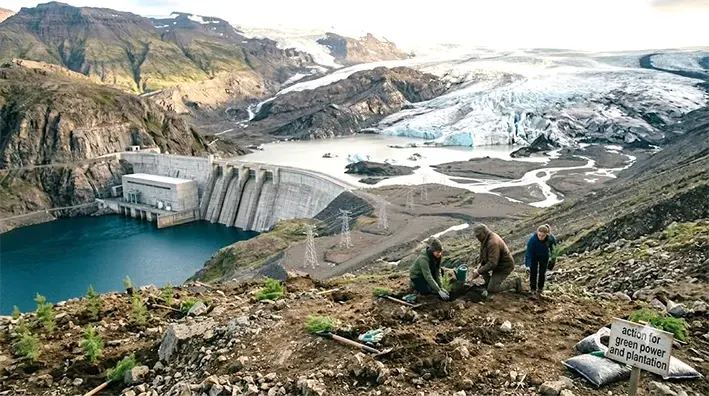
Hydropower fills this gap. It offers dispatchable, flexible, low-carbon power that can ramp up quickly to meet peak demand and provide grid stability, while pumped-storage hydropower functions as a large-scale, long-duration battery for excess power generation by solar plants. Multipurpose hydropower projects go further still, delivering flood moderation during the monsoon, irrigation water, drinking-water security and drought resilience - benefits that are indispensable for a monsoon-dominated country navigating both climate mitigation and adaptation.
The Northeast offers some of the clearest examples of this potential. The 2,000 mw Subansiri Lower Hydroelectric Project on the Assam-Arunachal border is designed not only to generate clean power but to provide a meaningful flood cushion, attenuating peak flows into the Brahmaputra valley. The under-construction Dibang Multipurpose Project (2,880 mw) aims at a similar dual role, and projects on the Siang and other tributaries hold comparable promise. Arunachal alone holds an estimated 50 gw of hydropower potential - nearly equal to India's entire current installed hydropower capacity - capable of generating some 200 billion units annually, displacing more than 120 million tonnes of coal every year, and avoiding close to 200 million tonnes of CO? emissions annually. That single avoided figure exceeds India's entire annual forest carbon absorption and amounts to more than half of the country's transport-sector emissions. Developed sustainably - with rigorous environmental safeguards, early-warning systems for glacial lake outburst floods and landslides, and genuine benefit-sharing with local communities - this potential could meaningfully strengthen both Assam's flood resilience and India's clean-energy transition.
Our responsibility
We built the systems that powered modern prosperity - and, unintentionally, the systems now destabilising the climate. We carry the knowledge and the responsibility to redesign them. That means accelerating the deployment of renewables alongside storage and smart grids; building sustainable hydropower and multipurpose water projects that deliver both clean power and water security, flood control on the Brahmaputra system; improving energy efficiency across industry, buildings and transport; planning a just transition, so that coal-dependent communities are not abruptly abandoned; and protecting and restoring the Northeast's forests, which remain vital carbon sinks and regulators of local climate and hydrology.
We have already placed considerable strain on this planet through decades of reckless extraction and pollution. Without decisive action now, the generations that follow inherit no stable climate, no secure water, no productive land and no safe future. This is not merely a technical challenge; it is a moral imperative. Here, where the Himalayas meet the Brahmaputra and where our people live daily with the realities of flood and drought, the stakes could not be higher.
We cannot afford to remain silent spectators in this debate. We possess the technical grounding to distinguish short-term convenience from long-term sustainability, and our responsibility extends beyond designing power plants and transmission lines to helping shape the policies that reduce emissions while securing our energy future. The true measure of success in this century will not be the number of megawatts we generate, but how responsibly we generate them, and how effectively we safeguard the environment for those who come after us. (The author is a consultant in hydro projects development.)