[ AN Mohammed ]
Global warming does not recognise a border. It does not pause at the McMahon Line, halt at the Indo-Nepal frontier, or respect the sovereignty of any nation. The glacier that collapses on the Nepal-Tibet border, the moraine dam that breaches in Tibet, the cloudburst that drowns a valley in Sikkim - each is a signal that the planet's climate system operates as one indivisible whole, indifferent to the political maps drawn upon it.
What happens in the high Himalaya does not stay in the high Himalaya; it descends, in the form of flood and fury, upon the plains of Arunachal, Assam and the fields of Bangladesh, and it registers, in the form of carbon and consequence, upon the entire Earth. If the crisis itself knows no boundary, then neither can the response to it. This is the lens through which India's hydropower ambitions in Arunachal Pradesh must be understood - not as a regional infrastructure programme, but as a frontline contribution to a planetary defence.
The events of recent years have moved this argument out of the seminar hall and onto our doorsteps. When a glacial collapse along the Nepal-Tibet border claimed hundreds of lives in late August 2026, and when the south Lhonak glacial lake outburst destroyed the Teesta-III dam in Sikkim in 2023, the message was unmistakable: the Earth's youngest, most fragile mountain system is destabilising under the weight of accelerated warming, and the destabilisation will not confine itself politely within any single country's territory.
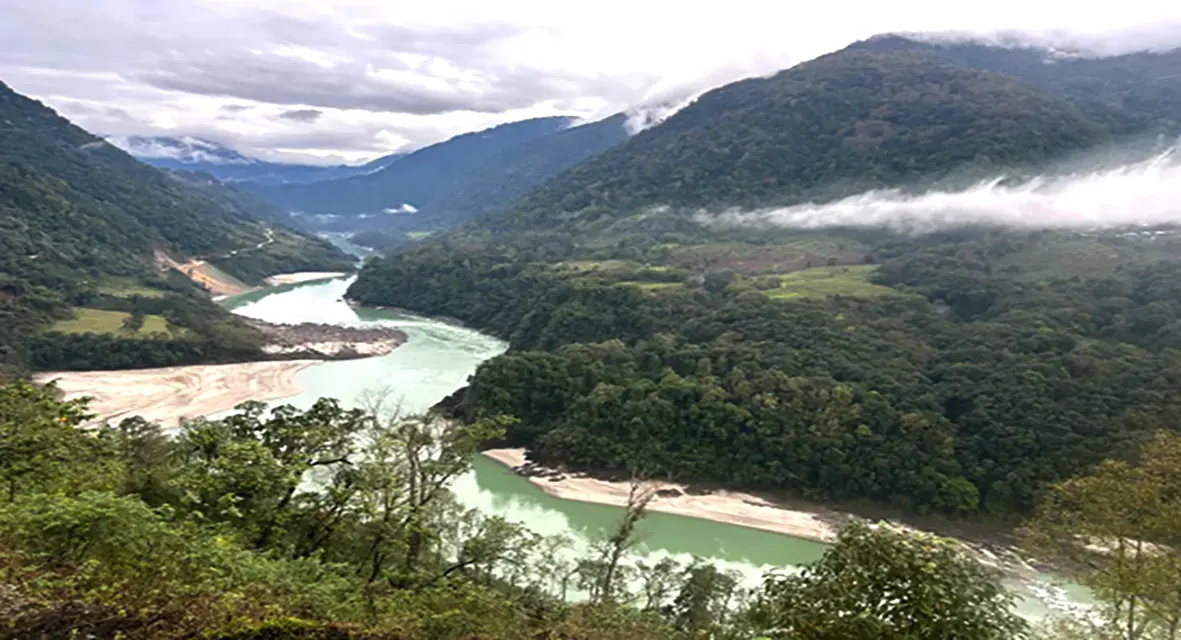
As glaciers retreat across the Tibetan plateau and the high Himalayas, thousands of moraine-dammed glacial lakes are swelling to dangerous proportions. In Arunachal alone - where satellite monitoring of basins like Mago Chu and Tawang has revealed continuous expansion of high-risk lakes - the threat of catastrophic glacial lake outburst floods (GLOFs) grows more acute with every fraction of a degree in global temperature rise. Every tonne of carbon emitted anywhere on Earth adds to that fraction. Every tonne of carbon displaced by clean, firm power generated in Arunachal subtracts from it. This is the arithmetic of a shared planet, and it is why hydropower development here cannot be dismissed as a merely local or merely national concern.
A humble share in saving mankind
India has committed to carbon neutrality by 2070 - a full generation after the advanced economies that industrialised first and emitted longest, and a decade behind China. That timeline is often described in the language of policy: targets, trajectories, nationally determined contributions. But at its heart, India's energy transition is not a policy. It is a humble share - one nation's portion of a burden that belongs to the whole of mankind.
No single country can decarbonise the atmosphere alone, just as no single country can flood it alone. Every gigawatt of clean, dispatchable power that India brings onto its grid, every tonne of coal it does not have to burn because a river in Arunachal was harnessed instead, is a contribution to a planetary account from which every nation, rich and poor, upstream and downstream, ultimately draws.
This is why the scale of the opportunity matters. Arunachal holds roughly 50 gigawatts of undeveloped hydropower - nearly half of India's entire unmapped hydro potential, and one of the largest reserves of clean, storable, dispatchable energy left untapped anywhere on the planet. To leave it undeveloped is not a neutral act of restraint; it is to forfeit a resource that the whole of humanity, in its race against the climate clock, urgently needs.
Why solar alone cannot carry the weight
To save mankind from irreversible, runaway climate change, the world must replace fossil-fuel energy systems with zero-carbon generation before the planet breaches its most dangerous tipping points. India has made immense strides in installing non-fossil capacity, driven heavily by solar and wind. Yet variable renewables carry an inherent structural limitation: the sun does not shine at night, and monsoon clouds routinely depress solar yields for weeks at a stretch.
Without massive, long-duration storage and firm, dispatchable capacity behind it, a grid reliant solely on intermittent renewables cannot sustain a modern, populous nation - and will, sooner or later, fall back on the very thermal coal power the world is trying to leave behind.
Storage-based hydropower is the answer; variable renewables cannot provide for themselves. It offers clean, large-scale balancing power that can react instantly to grid fluctuations, smooth out solar's intermittency, and permanently displace baseload coal generation. To retain thermal power stations because clean storage was never built is not merely an Indian loss - it is a loss borne by every future generation, everywhere, that inherits a hotter, less stable planet as a result.
From hazard to buffer: Reservoirs as shields for the next generation
The primary danger posed by climate change in the high mountain Asia region is the uncontrolled release of trapped meltwater. When an unstable moraine dam breaches high in the mountains, a wall of water, ice, and debris accelerates down narrow river valleys. Unregulated, these surges erode riverbanks, erase communities, and overwhelm the densely populated plains of Assam - plains that had no part in creating the glacial instability now bearing down upon them, a stark reminder that climate consequence, like climate cause, is no respecter of who is responsible and who merely lives downstream.
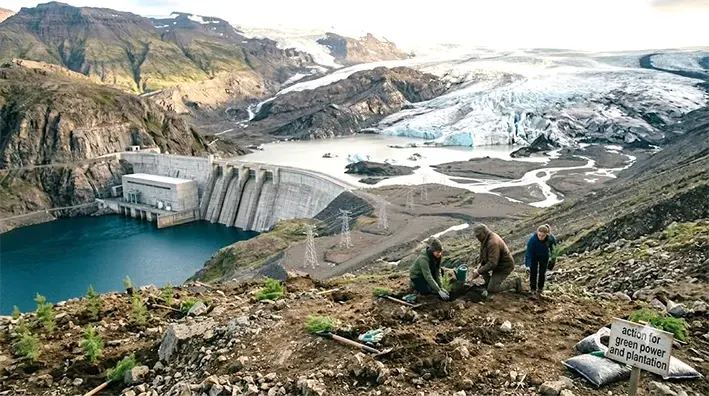
Well-engineered storage reservoirs act as critical shock absorbers against these surges. Projects designed with dedicated flood-cushion storage, dynamic spillway gates, and early-warning telemetry do not exacerbate flood risk; they capture and moderate violent surges before they reach vulnerable populations downstream.
# Surge absorption: A large storage reservoir on major tributaries - such as the Subansiri, Dibang, or the proposed Upper Siang Multipurpose Project - provides empty buffer volume during the monsoon and GLOF season. Peak flood surges that would otherwise devastate downstream valleys can be detained and released at controlled, safe discharge rates, protecting the children who will inherit these rivers long after the projects that tamed them are built.
# Transboundary water security: Upstream on the Yarlung Tsangpo (Siang), mega-projects like China's Medog development, combined with unmapped landslide-dammed lakes in Tibet, create significant hydrological uncertainty for downstream riparian zones. Here again, the border is meaningless to the water itself; what is built upstream, in another nation, determines what arrives downstream, in ours. Storage capacity within Indian territory is the only physical buffer available to moderate a sudden, unexpected upstream release or structural failure that originates entirely beyond India's control.
The choice ahead: Informed engineering over reflexive retreat
A retreat from hydro development out of fear of Himalayan fragility misunderstands the nature of climate adaptation. Leaving rivers unregulated does not prevent glacial melting, nor does it stop moraine dams from breaching. It simply leaves millions in the plains of Northeast India undefended against a danger that is already at their gates - and it abdicates India's own portion of a global responsibility that cannot be met by hesitation.
This is not an argument for unscrutinised construction. Every lesson of past decades must inform modern engineering standards:
# Rigorous seismic and geotechnical standards, accounting for site-specific peak ground acceleration, extreme sediment loads, and cascading multi-hazard scenarios such as simultaneous landslide-induced wave action and cloudbursts.
# Integrated early-warning systems, linking satellite monitoring of high-risk glacial lakes directly to reservoir operational protocols, so that pre-emptive drawdown can occur before a flood wave arrives.
# Genuine stakeholder engagement, with indigenous communities such as the Adi and Idu Mishmi recognised as the rightful custodians of these valleys. Consent, equitable profit-sharing, robust local infrastructure, and land-for-land rehabilitation must form the core of every project, moving away from top-down imposition toward true partnership.
Conclusion: A debt to the future
The Himalaya is signalling, with increasing urgency, that the climate crisis is already reshaping the planet's hydrology - and that no nation, however far from the glaciers, is exempt from what follows. Global warming will not wait for consensus, and it will not stop at any frontier. Slowing it demands a rapid, worldwide energy transition, and that transition cannot succeed without firm, clean hydropower to anchor the renewable grids the world is racing to build.
At the same time, the communities living downstream of a rapidly melting Himalaya need real, physical protection today, not promises for later. Storage hydropower in Arunachal answers both demands at once: it supplies the clean energy that helps mitigate a crisis with no borders, and it builds the hydrological shield that protects human life from a danger with no borders either. Pursued with rigorous science, ecological care, and genuine respect for local communities, this is not simply an investment in a state's development.
It is India's humble, necessary share in the far larger task of saving mankind from a future it is still, just barely, in time to avert - and a debt of protection owed to every generation still to come. (The contributor is a consultant in hydropower development. The views expressed are personal.)