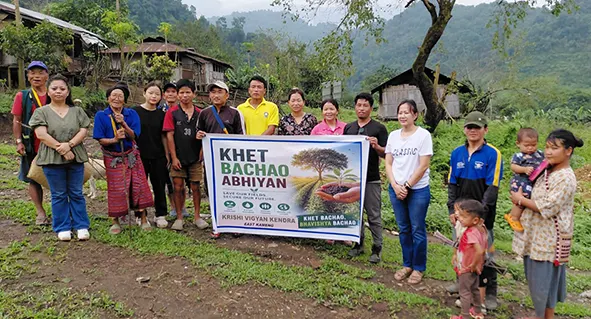
PAMPOLI, 21 Aug: In a major push towards community-led ecological management, the East Kameng Krishi Vigyan Kendra (KVK) organised a comprehensive parthenium awareness programme at its campus here on Friday to mark the Parthenium Awareness Week.
The extension programme targeted local farming families and rural youths to arrest the rapid spread of the highly invasive toxic weed Parthenium hysterophorus (commonly known as congress grass or gajar ghas), which has been encroaching upon agricultural plots and roadsides across the district.
Addressing the gathering, KVK Head Dr MC Debnath detailed the acute threats posed by the weed. Parthenium releases potent allelopathic chemicals, notably the toxic allergen parthenin, which aggressively suppresses the germination of vital food crops and local hill pastures.
Furthermore, continuous physical contact with the weed triggers severe contact dermatitis and skin allergies in humans, while airborne pollen grains are a primary source of chronic respiratory disorders including asthma, allergic rhinitis, and bronchitis in rural communities.
Agronomist Dr W Purnima Devi issued a warning regarding livestock safety. Animals grazing on infested pastures are prone to 'bitter milk disease' and acute mouth and teat ulcerations. Severe or prolonged ingestion of the weed biomass can lead to systemic toxicity, direct suffocation, and eventual mortality in dairy cattle and domestic goats.
All total 24 participants attended the programme.
In Upper Subansiri district, to mark the nationwide campaign on 21st Parthenium Awareness Week (16-22 August) the KVK conducted various programme in different parts of the district.
The activities included awareness programme on harmful effects of parthenium and its disposal through composting in pits, distribution of leaflets on integrated management of parthenium, display of banners and posters in exhibition stall, cleaning of farm and office premises, etc.
The awareness programmes were conducted in various places like Kuporijo, Lida, Tabarijo, Tajiparom, Maro and KVK office. Large numbers of farmers, farmwomen and rural youths actively participated in the programmes.