
[ Badak Yomgam ]
The debate over the proposed Siang Upper Multipurpose Project (SUMP) is dominated by geopolitical arguments written by external writers, researchers, and retired military officials who have never lived in our villages.
When the government first introduced the dam project, it promised it would create jobs for local youths, supply clean electricity, and bring progress. The deputy chief minister announced that the Siang river would become an adventure tourism spot. Now, those promises of tourism and economic prosperity are ignored, and the government says the dam is built only for national security.
Writers who live far from the border treat the Siang region as a strategic chessboard and use national security to justify mass displacement. As a resident of the Siang valley, the actual reality is coercion, the bypass of environmental laws, and the removal of indigenous rights.
Many outsiders focus only on the project investment of thousands of crores of rupees, which is why many commentators suddenly write about this issue. They care only about the financial scale and the high-level geopolitical narrative. They state that because the project is for national security, the local population must leave their land. This logic demands that local people lose their livelihoods, lands, and future for financial compensation before anyone considers the actual consequences.
Supporters of the dam point to the Siang Development People’s Forum and claim the public supports the pre-feasibility report. This narrative hides how the government manufactures consent. There is no organic support from the affected communities. The individuals who signed the documents represent selective persons and fractured groups, not the villagers as a whole. Local politicians and bureaucrats have compromised the process. Instead of transparent dialogue, authorities use cash payouts to get signatures on documents. External commentators see a signed agreement as democratic consensus, but for the local residents, it is the exploitation of financial vulnerability.
The government has divided the population of Arunachal Pradesh into fractions. It separates the people who face immediate submergence from those who do not face submergence. The state uses the unaffected individuals to label the actual victims as outsiders or obstacles to progress. The reality is that none of the aggressive commentators supporting this project have any personal connection to the dam or the land that will be submerged.
When external commentators speak with false authority, it is clear that they face no personal consequences from this project; they simply repeat a script controlled by higher authorities to push a one-sided story.
This manipulation of data happens across the entire state, not just in the Siang basin. The government uses the same strategy for the newly approved 1,720 mw Kamala hydroelectric project and the 1,200 mw Kalai-II project on the Lohit river. These mega-dams are pushed forward using manipulated environmental data, rushed public hearings, and fabricated consensus. The government allocates financial shares among politicians and bureaucrats and gives approvals to builders before any comprehensive pre-feasibility report (PFR) or environmental impact assessment (EIA) is properly conducted or accepted by the local stakeholders. This proves that the projects are designed to fast-track lucrative infrastructure contracts rather than prepare for natural disasters.
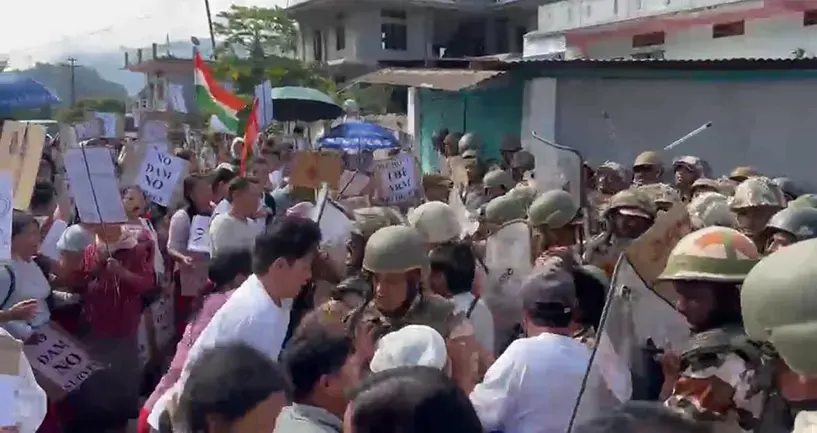
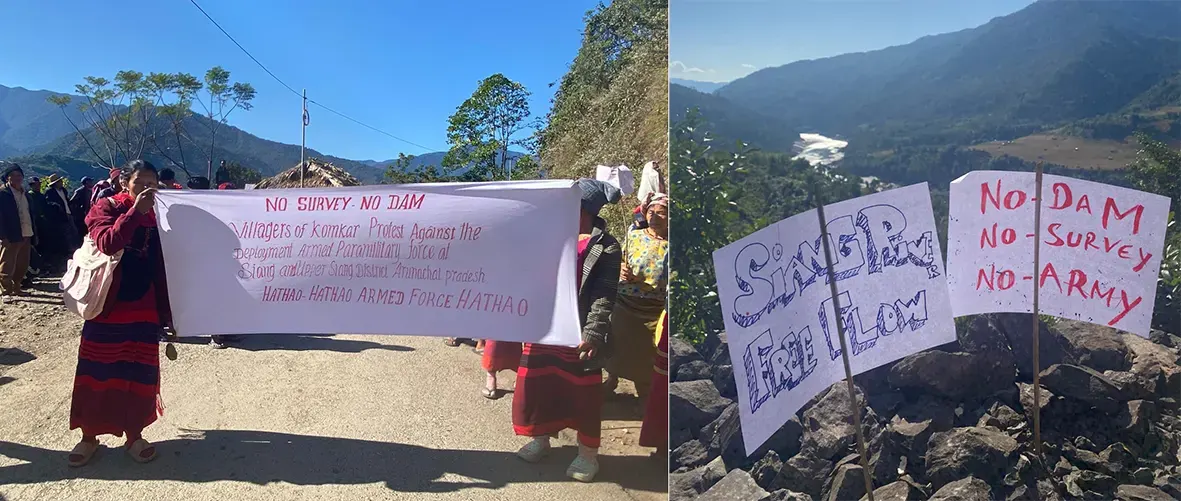
If these projects are truly designed for national security and the welfare of our people, the government must answer why national security requires the criminalisation and division of its own frontier citizens. Instead of showing transparent scientific data to the local population, the state machinery uses intimidation. It files police complaints against peaceful village protestors, removes village elders from their traditional institutional posts for speaking out, and uses administrative pressure to silence opposition. True national security cannot be built on state-sponsored fear against the border citizens who protect the frontier.
External commentators and academics treat displacement as a single word on a spreadsheet. For the residents of the Siang region, displacement means the permanent destruction of our history, ancestral lands, culture, and livelihoods. The advocates of the dam hide the severe environmental damage that will happen after construction, and they ignore the complex biodiversity of the Eastern Himalayan region. The loss of biodiversity will not remain confined to a single valley; it will trigger a collapse across the entire ecosystem of Arunachal. The most vocal defenders of the project do not live in Arunachal. They demand that local people give up their rivers, mountains, and identity for the national interest, while they suffer no personal losses from the destruction.
National security is a real concern, but a simulated water bomb from China is not the only threat India faces. There are many urgent situations along the strategic border right now if the state truly cares about national security. Why does the government focus all its attention on this single project alone? The commentators cannot justify why this project is the only priority. They do not know how many moredams are planned for Arunachal, yet they speak with authority. They call the local victims outsiders, which forces us to ask: who is the true insider here, us or them? Instead of focusing entirely on a single destructive river project that displaces its own citizens, the government should look at the broader border landscape and place its defence efforts in other critical sectors along the frontier.
Furthermore, if the government cannot manage its existing Ganges treaty with Bangladesh, then pursuing broader transboundary water talks is a waste of time.
The residents of this region do not need commands from higher authorities or external experts to tell them how to protect their land. We must state the facts clearly: where are our indigenous rights? Real security is achieved by empowering and protecting the border residents, not by destroying their villages, suppressing their rights, and submerging their future.
The external writers are detached from reality. They do not care if local communities lose their lives, ancestral lands, or forests. They will watch the destruction from a distance without experiencing the damage. These writers must put themselves in the position of the villagers who are about to lose their entire heritage and livelihoods. It lacks humanity and equity to demand the total sacrifice of a community.
By demanding that local citizens give up their ancestral heritage for a distant strategic goal, these external voices are advocating the total elimination of our people. (The writer is a PhD scholar and a resident of the Siang valley)